
 11
11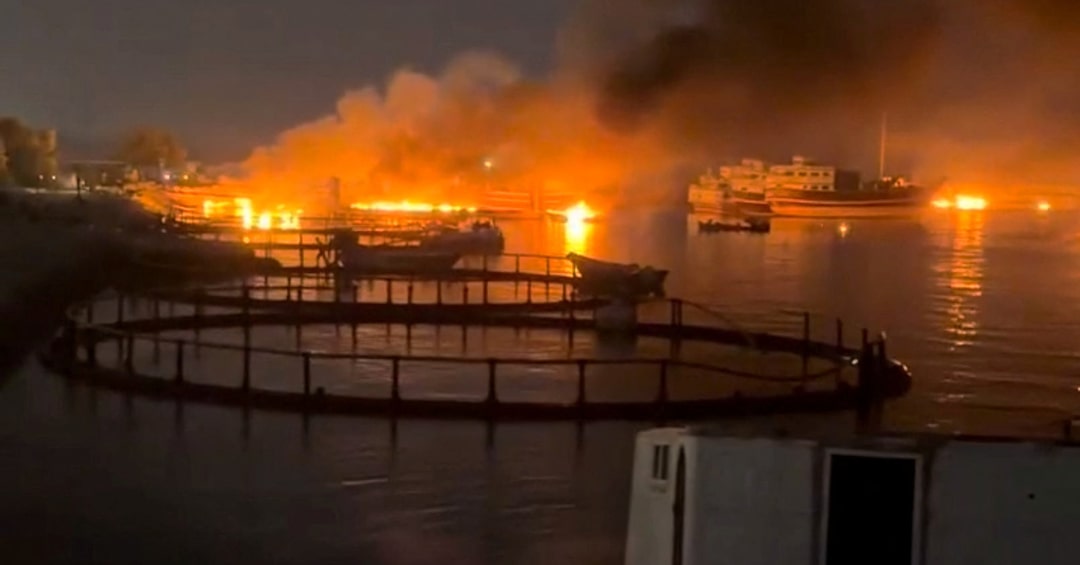


The United States has launched a fresh wave of military strikes against Iran, saying the operation was aimed at safeguarding freedom of navigation through the strategically important Strait of Hormuz.
The strikes came after Tuesday’s attack on three cargo ships transiting the Strait of Hormuz, which Washington blamed on Tehran. In response, Iran launched retaliatory attacks targeting Kuwait and Bahrain, further escalating tensions across the Gulf region.
The renewed hostilities unfolded just hours after U.S. President Donald Trump declared that the interim ceasefire with Tehran had effectively collapsed.
The U.S. Central Command (CENTCOM) said the latest operation was intended to weaken Iran’s capacity to threaten commercial shipping in the Strait of Hormuz.
“The United States is holding Iran accountable for recent unjustified aggression against commercial shipping and civilian crews freely navigating a vital international waterway,” CENTCOM said in a post on X.
Reports indicated that explosions from the strikes were felt in several cities along Iran’s southern coastline, with power outages recorded in some locations.
In retaliation, Tehran launched a second consecutive day of missile and drone attacks targeting Kuwait and Bahrain, both of which host U.S. military facilities.
Kuwait’s Defence Ministry said its air defence systems intercepted incoming missiles and drones. Qatar also briefly raised its security alert level before later announcing that the situation had stabilised.
A U.S. official, speaking anonymously to Reuters, said Wednesday’s operation was expected to be more extensive than the strikes conducted a day earlier.
President Trump defended the military action in a post on his Truth Social platform, describing it as retaliation for the attack on commercial vessels.
“This is in retribution for yesterday’s bombing of ships by Iran. If it happens again, it will get much worse!” he wrote.
The Strait of Hormuz remains one of the world’s most strategically significant maritime routes, having accounted for approximately one-fifth of global oil shipments before the conflict intensified.
Although Iran has not officially claimed responsibility for the attacks on the cargo ships, analysts believe Tehran may have used such actions to strengthen its negotiating position.
Iran’s top negotiator, Mohammad Baqer Qalibaf, warned that Tehran would continue to respond to any military action.
“The U.S. has yet to learn that bullying and breaking its commitments no longer come without a cost. Let me be clear: If you strike, you will be struck back,” he wrote on X.
Qalibaf also maintained that the Strait of Hormuz would only be reopened under arrangements determined by Iran rather than through U.S. military pressure.
The latest exchange of strikes has further diminished hopes that the memorandum of understanding signed on June 17 could develop into a lasting peace agreement to end the conflict, which began with U.S.-Israeli attacks on Iran on February 28.
Speaking before a NATO summit in Turkey on Wednesday, President Trump said he believed the ceasefire agreement had effectively ended.
“It’s a very interesting question. To me, I think it’s over. I don’t want to deal with them,” Trump said.
“If we make a deal with Iran, I’m not sure that will stick. I found them to be very dishonourable people,” he added.