 11
11 

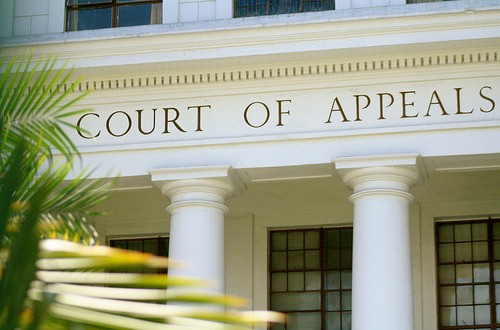
The Court of Appeal in Lagos on Wednesday upheld the final forfeiture of N293.97 million, investment assets and several properties linked to retired Major-General Emmanuel Atewe to the Federal Government.
The decision came after a three-member panel led by Justice Boloukuromo Ugo dismissed Atewe’s appeal against the judgment of the Federal High Court in Lagos, which ordered the final forfeiture of the assets.
The Economic and Financial Crimes Commission (EFCC) had approached the trial court with an application seeking an order forfeiting the properties, assets and money to the government.
Justice Chukwujekwu Aneke of the Federal High Court in Lagos who presided over the case moved in favour of the anti-graft agency and granted the order of forfeiture.
The forfeited assets include N293.97 million, 30,000 MTN-linked units managed by Stanbic IBTC Asset Management Limited, and several properties in Abuja and Bayelsa State.
The properties comprise plots of land located along the Outer Northern Expressway, Jahi, Sabon Lugbe, Kuje, Gaube Farmland Extension II Layout and Sector Centre B Layout in Abuja, as well as a commercial property in Yenagoa, Bayelsa State.
But the retired Major-General Atewe had rushed to the intermediate appellate court with an appeal to upturn the decision.
Atewe, in the appeal, had argued that the forfeiture proceedings were incompetent because he was entitled to the protection provided under Section 123 of the Armed Forces Act.
He also contended that the proceedings should not have commenced while criminal charges against him were pending and that the Federal High Court lacked jurisdiction to entertain the EFCC’s application.
But the Court of Appeal rejected the arguments.
By a unanimous verdict, the appellate court affirmed the decision of Justice Chukwujekwu Aneke of the Federal High Court, holding that the appeal lacked merit.
Bar & Bench Watch reports that at the trial high court level, the EFCC had told the presiding judge that its investigation linked the assets to funds allegedly diverted from money released for the operations of the Joint Task Force, Operation Pulo Shield.
According to the commission, about N8.537 billion allocated to the task force was allegedly diverted through a network of companies and individuals acting as proxies.
It further alleged that billions of naira were paid to companies for services that were never rendered and that part of the funds was later used to acquire assets allegedly linked to Atewe through companies associated with him.
The commission also stated that N297 million traced to Cisco Nobots Limited was used in a property transaction in Port Harcourt, from which it later recovered N290 million.
The case forms part of a broader EFCC investigation into the alleged diversion of funds meant for Operation Pulo Shield. The investigation also led to the prosecution of former Director-General of the Nigerian Maritime Administration and Safety Agency (NIMASA), Patrick Akpobolokemi, and others.
The Federal High Court had initially granted an interim forfeiture order before making it final after holding that Atewe failed to satisfactorily explain the legitimate source of the asset
Ruling on the two issues raised by Atewe at the appellate court level, the three member panel of the court held that the applicability of Section 123 of the Armed Forces Act raised by the retired Major-General did not apply because Atewe had retired from military service before the forfeiture proceedings were instituted.
The court noted that Atewe admitted his retirement in an affidavit filed before the trial court and held that the statutory protection was available only to serving members of the Armed Forces.
It further held that Atewe failed to satisfactorily establish the legitimate source of the assets, noting that his explanation that they were acquired from honoraria did not sufficiently prove lawful ownership.
The appellate court also dismissed his argument that the civil forfeiture proceedings constituted an abuse of court process because they were commenced while his money laundering trial was pending.
According to the court, the institution of civil forfeiture proceedings during the pendency of criminal proceedings does not, by itself, amount to an abuse of judicial process.
The Court of Appeal consequently dismissed the appeal and affirmed the Federal High Court’s order directing the final forfeiture of the assets to the Federal Government.