Featured
Ebola: NCDC tracks 53 contacts as patient’s condition improves

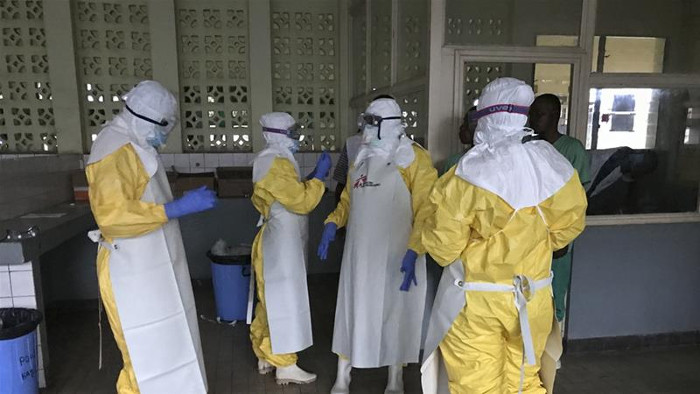
The Nigeria Centre for Disease Control and Prevention (NCDC) has identified and monitored 53 contacts linked to Nigeria’s confirmed case of Ebola disease caused by the Bundibugyo virus in the Federal Capital Territory (FCT), as the patient’s condition continues to improve.
The Director-General of the NCDC, Dr Jide Idris, disclosed this on Sunday in Abuja, saying the 42-year-old female patient was receiving medical care in isolation.

According to the agency’s Ebola Disease Situation Report dated October 24, 2026, the contacts identified include healthcare workers, domestic staff and the patient’s spouse.
Idris said contact tracing and monitoring were ongoing, with public health teams working to identify anyone who might have been exposed to the patient and monitor them for 21 days after their last possible exposure.
He urged anyone contacted by public health officials to cooperate fully and provide accurate information to support efforts to prevent further transmission.
The patient reportedly returned from Uganda through Addis Ababa on October 3 and developed symptoms, including fever, diarrhoea, generalised body aches and sore throat, on October 7.
She visited a private health facility on October 10 and was admitted to another private facility the following day.
The NCDC was notified of the case on October 19, while laboratory confirmation was made on October 20 by the agency’s National Reference Laboratory.
Idris said the national Incident Management System had been activated at the highest level to coordinate the response.
He added that diagnostic testing and laboratory surveillance were continuing, while genomic sequencing of the confirmed case had been completed by the NCDC National Reference Laboratory and the African Centre of Excellence for Genomics of Infectious Diseases.
The NCDC also disclosed that a suspected Ebola case reported by Rivers State on October 23 tested negative, with the result communicated to the state.
As part of efforts to strengthen clinical preparedness, the University of Abuja Teaching Hospital has undergone a needs assessment and optimisation exercise to prepare it for use as an isolation and treatment centre.
The agency is also assessing infection prevention and control capacity across states and healthcare facilities, while engaging with the facility managing the confirmed patient.
Idris said the NCDC had strengthened its stockpile of personal protective equipment and other essential supplies, including the addition of 500 donated laboratory testing kits.
He added that enhanced surveillance at the country’s points of entry was continuing, alongside public awareness campaigns and efforts to monitor rumours and misinformation.
The NCDC urged Nigerians to practise regular hand hygiene, avoid contact with the blood and body fluids of suspected cases, promptly report possible exposure and cooperate with contact-tracing teams.
It advised anyone who develops symptoms after possible exposure to contact public health authorities and follow their instructions before visiting a healthcare facility.
The agency also urged the public to remain calm, avoid stigmatising affected persons and rely on verified information from official public health sources.
Ebola disease is a severe illness caused by viruses in the Orthoebolavirus genus.
The Bundibugyo virus is one of the viruses known to cause Ebola disease in humans.
The disease can spread through direct contact with the blood or other body fluids of an infected person who is symptomatic, or with contaminated materials.
Contact tracing, isolation, infection prevention and control, and prompt identification of suspected cases are key measures for containing outbreaks.
People identified as contacts are monitored for 21 days after their last possible exposure, in line with public health guidance.



The Fake Professor: Nigeria’s obsession with titles, by Hope O’Rukevbe EGHAGHA

Ebola: NCDC tracks 53 contacts as patient’s condition improves

Tope Alabi threatens legal action against Canada-based pastor over Toluwanisings’ death

Rivers lawyers give VeryDarkMan seven days to apologise over alleged defamation

Tinubu kicks off 2027 re-election campaign in Kaduna, seeks fresh mandate

Does Nigeria truly have over 103 million voters, asks Prof Chidi Anselm Odinkalu

Nigeria’s Ebola case linked to Kenya strain–FG

Oyebanji: The countdown starts now, by Abiodun Komolafe

Okpebholo threatens to sign death warrants of four kidnappers, reignites death row debate

FG secures 653 terrorism convictions in Abuja mass trial – Fagbemi

Tinubu appoints ex-DSS DG Yusuf Bichi NISS Governing Board Chairman

Agbakoba, Ojo, Etomi, three others to receive Gavel Lifetime Achievement Awards

Media Trust Group to launch AI-powered converged digital Newsroom

Ex-DSS officer apologises to DG over leaked memo, threatens lawsuit against SaharaReporters
N2bn Fraud: How Eteta Ita looted FIRS’ funds to service her private school ― Witness
Sanction of Judges: NJC on quiet revolution to cleanse judiciary—Prof Akinseye-George, SAN
A First generation bank employee on the run after diverting ₦40bn — Report
Does Nigeria truly have over 103 million voters, asks Prof Chidi Anselm Odinkalu

Nollywood mourns as veteran Actor Francis Duru dies at 57
Oyetola, Oyebamiji, others shun inauguration of Adeleke-led Tinubu Campaign Council in Osun
-
 General NewsOctober 23 2026
Tinubu appoints ex-DSS DG Yusuf Bichi NISS Governing Board Chairman
-
 Bar and BenchOctober 23 2026
Agbakoba, Ojo, Etomi, three others to receive Gavel Lifetime Achievement Awards
-
 NewsOctober 18 2026
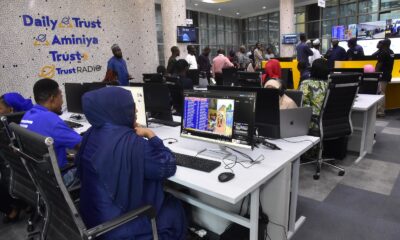
Media Trust Group to launch AI-powered converged digital Newsroom
-
 General NewsOctober 21 2026
Ex-DSS officer apologises to DG over leaked memo, threatens lawsuit against SaharaReporters
-
FeaturedMarch 19 2024
N2bn Fraud: How Eteta Ita looted FIRS’ funds to service her private school ― Witness
-
Bar and BenchMay 2 2025
Sanction of Judges: NJC on quiet revolution to cleanse judiciary—Prof Akinseye-George, SAN
-
CrimeJune 1 2024
A First generation bank employee on the run after diverting ₦40bn — Report
-
 CommentaryOctober 25 2026
Does Nigeria truly have over 103 million voters, asks Prof Chidi Anselm Odinkalu