Featured
Okpebholo threatens to sign death warrants of four kidnappers, reignites death row debate

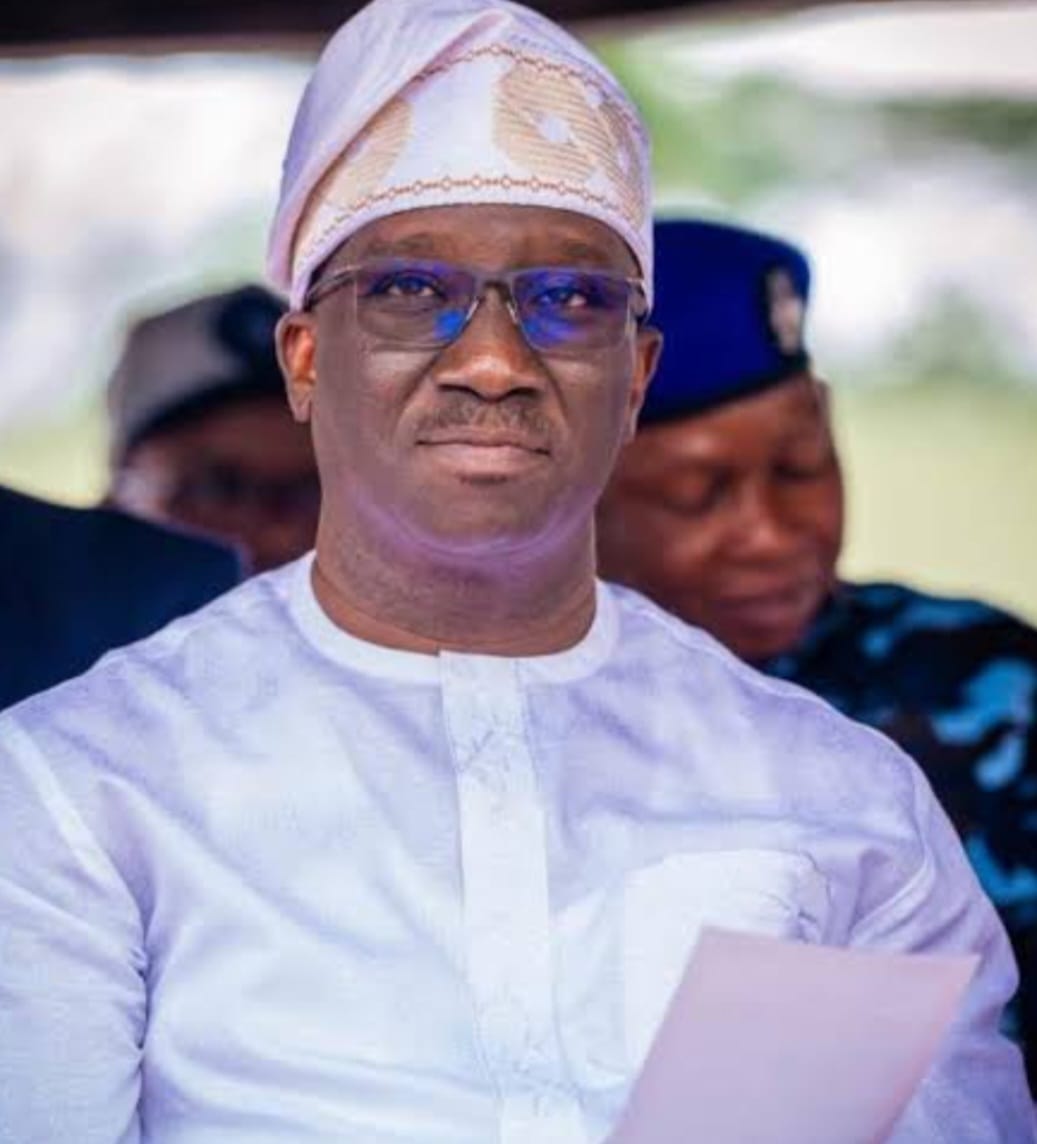
Edo State Governor, Monday Okpebholo, has threatened to sign the death warrants of four convicted kidnappers if they fail to appeal their sentences within 30 days, reigniting the debate over the reluctance of Nigerian governors to authorise the execution of condemned prisoners.
Okpebholo issued the warning on Friday while speaking at God’s People Worldwide Prayer Ministry in Ekpoma, where he discussed his administration’s campaign against kidnapping, cultism and other criminal activities.

The governor recalled that the four convicts were sentenced to death on September 29 by the Edo State Special Criminal Court for abducting a woman at the vegetable market along Airport Road, Benin City.
“If within 30 days they don’t appeal, I will execute,” he said.
Okpebholo said tackling insecurity became a priority upon assuming office, following discussions with President Bola Tinubu on the security situation in the state.
He explained that he had directed the Commissioner of Police to ensure the immediate arrest of those responsible for the abduction at the vegetable market.
“When the kidnappers attacked the vegetable market area, I told the commissioner of Police that I wanted them arrested without delay,” the governor said.
He added that he had met prominent traditional rulers across the state before commencing his crackdown and warned them against intervening on behalf of suspected criminals.
“I told them not to come begging me because I will not listen,” he said.
The governor also recounted what he described as spiritual encounters associated with his anti-cultism campaign, including the demolition of a building allegedly used by cultists.
“A black bird died in my office when I demolished their building. A vulture also died in my bed while I was contesting for governorship,” he said.
Earlier, the founder of the ministry, Pastor Ehijele Umuahia, urged congregants to support the governor beyond prayers by voting for him and his preferred candidates in the 2027 general elections, citing Proverbs 29:2.
Umuahia described Okpebholo as a humble and God-fearing man whom he had known for more than 15 years, dating back to the days of the late Chief Tony Anenih.
“I have known him for over 15 years, dating back to the days of Chief Tony Anenih, of blessed memory. Whenever Anenih came to visit me, he was one of those who accompanied him. That was how we came to know each other,” he said.
Death row population and governors’ reluctance
Okpebholo’s declaration comes against the backdrop of a longstanding challenge in Nigeria’s criminal justice system: the growing population of prisoners sentenced to death whose sentences remain unexecuted for years.
The Nigerian Correctional Service reported that 3,833 inmates were on death row across the country as of July 24, 2025. The figure formed part of a total custodial population of 81,558 inmates.
In March 2025, the then Acting Controller-General of the Nigerian Correctional Service, Sylvester Nwakuche, said the number of condemned inmates had risen from 3,590 in September 2024 to 3,688 in March 2025.
Nwakuche blamed the situation partly on governors’ reluctance to authorise executions or commute death sentences to life imprisonment, warning that the impasse was compounding congestion and management challenges in correctional facilities.
Although Nigerian courts continue to impose death sentences, executions have become exceptionally rare.
The European Union Agency for Asylum reported in its January 2026 country-focused report that no executions had been carried out in Nigeria since 2016.
The last reported executions took place in Edo State under former Governor Adams Oshiomhole in 2016, according to reports on the history of the country’s implementation of death sentences.
The reluctance of governors to sign death warrants has been attributed to several considerations, including concerns about wrongful convictions, the possibility of miscarriages of justice, human rights objections and the political and moral implications of authorising executions.
Some state governments have also cited the need to ensure that all legal procedures are exhausted before any death sentence is carried out. In practice, however, the prolonged suspension of executions has left thousands of condemned prisoners in uncertainty, while correctional authorities continue to bear the cost of their detention.
What the law says
Section 212 of the 1999 Constitution, as amended, empowers state governors to grant pardons, respite from punishment, substitute a less severe punishment or remit all or part of a sentence imposed for an offence under state law.
These powers are to be exercised after consultation with the relevant state advisory council on the prerogative of mercy.
The constitutional provision gives governors a significant role in determining whether a death sentence is carried out or commuted.
However, the execution of a condemned prisoner remains subject to the applicable law and the required legal procedures.
In Okpebholo’s case, the 30-day ultimatum raises questions about the status of the convictions, the defendants’ right to appeal and the legal requirements governing the execution of death sentences.
A failure to appeal within the period announced by the governor would not, by itself, establish that all legal requirements for execution had been satisfied. The applicable appeal procedures and any other legal requirements would still need to be observed.
Whether Okpebholo will proceed with the threatened warrants could therefore become a significant test of his administration’s approach to criminal justice, public security and the longstanding death row dilemma in Nigeria.




Oyebanji: The countdown starts now, by Abiodun Komolafe

Okpebholo threatens to sign death warrants of four kidnappers, reignites death row debate

FG secures 653 terrorism convictions in Abuja mass trial – Fagbemi

Petrol price hike looms as Brent Crude hits $115 amid US-Iran tensions

Oyetola, Oyebamiji, others shun inauguration of Adeleke-led Tinubu Campaign Council in Osun

INTERPOL arrests two Nigerians over $2.4m cyber fraud, recovers luxury car

Agbakoba, Ojo, Etomi, three others to receive Gavel Lifetime Achievement Awards

Nollywood mourns as veteran Actor Francis Duru dies at 57

Obasanjo’s son joins Tinubu Must Stay Movement
Tinubu appoints ex-DSS DG Yusuf Bichi NISS Governing Board Chairman

Ex-DSS officer apologises to DG over leaked memo, threatens lawsuit against SaharaReporters
Tinubu appoints ex-DSS DG Yusuf Bichi NISS Governing Board Chairman

Media Trust Group to launch AI-powered converged digital Newsroom
N2bn Fraud: How Eteta Ita looted FIRS’ funds to service her private school ― Witness
A First generation bank employee on the run after diverting ₦40bn — Report
Nollywood mourns as veteran Actor Francis Duru dies at 57
Agbakoba, Ojo, Etomi, three others to receive Gavel Lifetime Achievement Awards
Oyetola, Oyebamiji, others shun inauguration of Adeleke-led Tinubu Campaign Council in Osun
INTERPOL arrests two Nigerians over $2.4m cyber fraud, recovers luxury car

Nigeria’s judiciary ahead of 2027 – Between power and the people, by Prof Chidi Odinkalu
-
 General NewsOctober 21 2026
Ex-DSS officer apologises to DG over leaked memo, threatens lawsuit against SaharaReporters
-
 General NewsOctober 23 2026
Tinubu appoints ex-DSS DG Yusuf Bichi NISS Governing Board Chairman
-
 NewsOctober 18 2026
Media Trust Group to launch AI-powered converged digital Newsroom
-
FeaturedMarch 19 2024
N2bn Fraud: How Eteta Ita looted FIRS’ funds to service her private school ― Witness
-
CrimeJune 1 2024
A First generation bank employee on the run after diverting ₦40bn — Report
-
 NewsOctober 23 2026
Nollywood mourns as veteran Actor Francis Duru dies at 57
-
 Bar and BenchOctober 23 2026
Agbakoba, Ojo, Etomi, three others to receive Gavel Lifetime Achievement Awards
-
PoliticsOctober 23 2026
Oyetola, Oyebamiji, others shun inauguration of Adeleke-led Tinubu Campaign Council in Osun