 11
11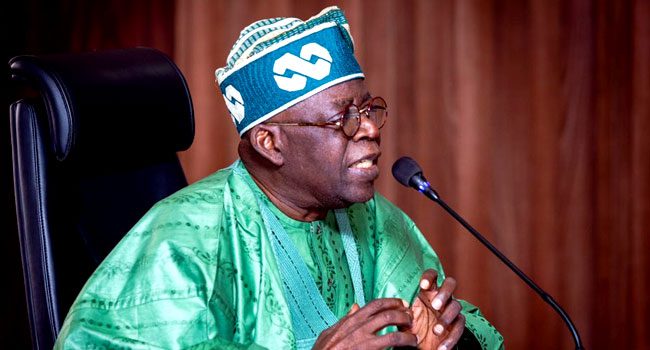


President Bola Tinubu has said difficult economic reforms were necessary to confront what he described as longstanding structural distortions in Nigeria’s economy and lay the foundation for sustained prosperity.
Tinubu stated this on Thursday in a nationwide broadcast marking Nigeria’s 66th Independence anniversary, in which he reflected on the economic conditions that confronted his administration when it assumed office in 2023.
According to the President, successive governments had postponed difficult decisions, allowing economic distortions to deepen and their consequences to accumulate.
“By 2023, poverty was rising, and hope was nearly gone. The country’s situation was darker than ever. We had no choice but to act,” he said.
Tinubu likened the country’s economic condition to that of a cancer patient who must undergo painful treatment to have a prospect of recovery.
He said previous administrations had, for too long, prioritised temporary relief instead of confronting what he described as the fundamental weaknesses in the economy.
“For too long, Nigeria’s leaders chose morphine while praying for a miracle that never came,” he said.
According to him, the country had spent enormous resources sustaining inefficient arrangements that were not designed to endure, while difficult decisions were repeatedly deferred and their consequences transferred to future generations.
Tinubu said his administration therefore resolved to confront the underlying problems despite the immediate economic consequences.
“When this Administration assumed office, we resolved to do things differently. We chose to excise the cancer,” he said.
The President acknowledged that the reforms had produced difficult side effects, but argued that the consequences of the reforms should not be confused with the underlying economic problems they were designed to address.
“The reforms that followed were difficult. The side effects were real. Yet, we must never confuse the medicine with the disease,” he said.
Tinubu said his administration’s economic reforms included measures aimed at correcting what he described as longstanding distortions and creating the conditions for sustainable growth.
He said the reforms had now moved Nigeria to what he described as a turning point, with the administration shifting its focus from economic stabilisation to widespread prosperity.
According to him, the Nigerian economy has grown by more than four per cent in 2026, while both the oil and non-oil sectors have contributed to what he described as a renewed period of stable growth.
He also cited lower oil theft, a substantial decline in inflation from its peak, rebuilt foreign reserves and greater stability in the foreign exchange market among developments recorded under his administration.
Tinubu further said Nigeria recorded more than $6 billion in non-oil export revenue in 2025, describing it as the highest in the country’s history.
“These are not idle claims. International observers, journalists, NGOs and multilateral institutions can see the change,” he said.
The President declared that the emergency phase of his administration’s economic programme was over and that the focus would now shift towards reducing the cost of living, creating jobs and expanding productive opportunities.
“The age of reform has done its work. Now begins the age of prosperity,” he said.
Tinubu said the government would pursue lower production and transportation costs by expanding agricultural production, mechanised irrigation, access to seeds and fertiliser, storage facilities and transportation infrastructure.
He also said the administration would continue investments in roads, railways and ports to improve connections between farms, factories and markets.
On employment, the President said jobs, enterprise and industrial growth would remain at the centre of the government’s policies.
He said the government would use Nigeria’s gas resources to power new industries, support businesses seeking to revive factories, expand digital connectivity and invest in skills required by employers.
Tinubu also acknowledged that millions of Nigerians were still struggling with food, school fees, medical expenses and transportation costs.
He said the difficulties faced by vulnerable Nigerians predated the reforms of the past three years and reflected the accumulated effects of low productivity, inadequate infrastructure, limited opportunities and institutional weaknesses over several decades.
“We cannot erase in four years what accumulated over generations. But we can change its course,” he said.
The President said the government was strengthening social support programmes for vulnerable households, improving the National Social Register and expanding access to higher education through the Nigerian Education Loan Fund.
He also cited the Consumer Credit Corporation (CREDICORP), which he said was providing working Nigerians with access to credit for vehicles, solar systems, digital devices and other essential assets.
Tinubu said the government would continue working with state and local governments to strengthen primary healthcare, basic education and other essential public services.
He said the administration’s objective was not merely to manage poverty more efficiently but to eliminate its underlying causes through sustained economic growth and the creation of productive opportunities.
“It will take time. It will require discipline. It will require sustained growth year after year and the creation of millions of productive opportunities across our country,” he said.
The President said Nigeria was now embarking on the next phase of its economic journey from what he described as a position of greater strength.
“For the first time in decades, we embark on this task from a position of strength; with an economy whose fundamental direction has been corrected,” he said.
He urged Nigerians to remain committed to the country’s future, declaring that the administration’s next task was to ensure that the benefits of economic reforms translated into improved living standards and opportunities for citizens.
Tinubu concluded by declaring that Nigeria had “corrected its course” and urged Nigerians to move forward without returning to what he described as the economic practices of the past.
“Our destination is in sight. Our foundations are strong. Our direction is clear. So let us go forward. No looking back,” he said.
President Tinubu assumed office in May 2023 and subsequently introduced major economic policy changes, including the removal of the petrol subsidy and reforms to the foreign-exchange regime.
In his 2026 Independence Day address, he characterised those measures as part of a broader effort to correct longstanding economic distortions and said the government was moving from a period of reform towards a focus on prosperity.