
 11
11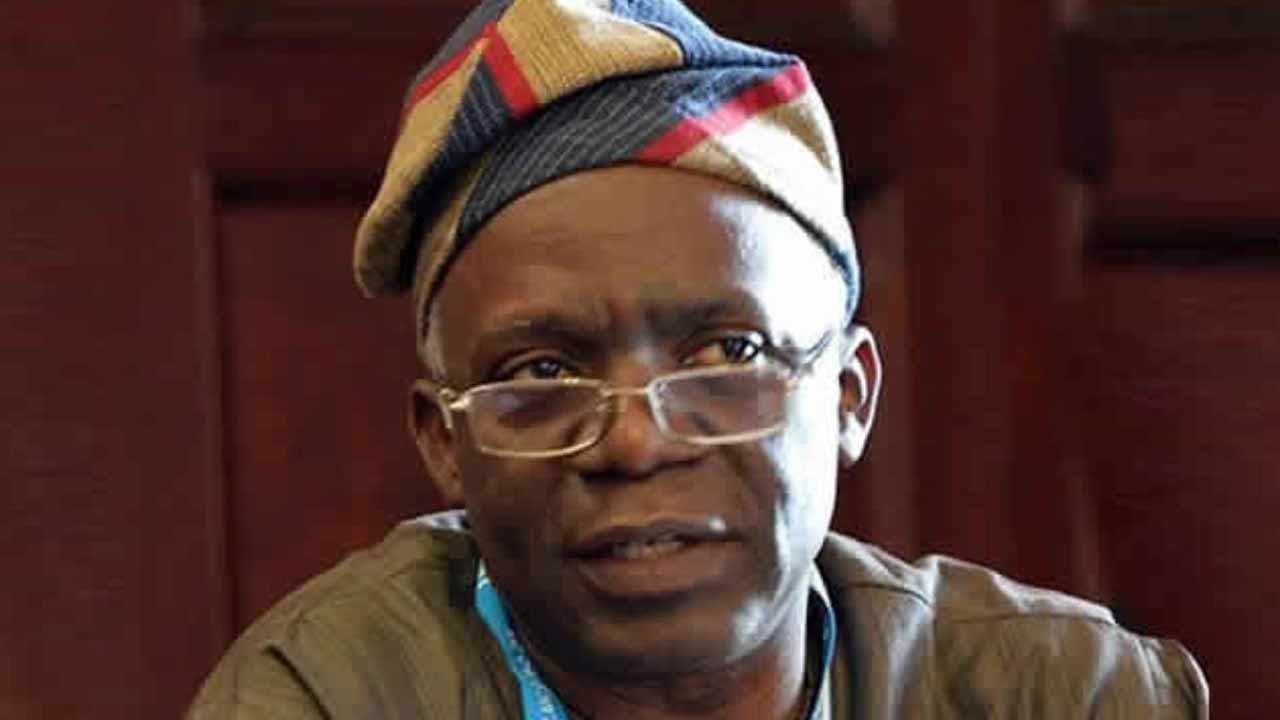


Human rights lawyer and Chairman of the Alliance on Surviving COVID-19 and Beyond (ASCAB), Femi Falana, SAN, has urged the Economic and Financial Crimes Commission (EFCC) to urgently investigate the alleged failure to account for N33.75 billion earmarked for cash transfers to poor and vulnerable Nigerians and recover any funds found to have been diverted.
Falana made the call following revelations by the Auditor-General for the Federation, Mr Shaakaa Kanyitor Chira, that the Federal Government could not provide sufficient evidence to auditors that N33.75 billion in cash transfers meant for more than 3.29 million vulnerable households actually reached genuine beneficiaries.
The disclosure is contained in the Auditor-General’s 2024 Annual Report on Non-Compliance/Internal Control Weaknesses in Ministries, Departments and Agencies of the Federal Government.
According to the report, electronic transfers totalling N33.751 billion were made to 3,295,207 households and beneficiaries drawn from the National Social Register and enrolled on the National Beneficiary Register across 35 states during the 2023 financial year.
However, auditors said they could not adequately authenticate the payments because essential beneficiary information and reconciliation records were not provided.
In a statement dated September 6, 2026, Falana described the development as too serious to be dismissed as a mere administrative or accounting irregularity, insisting that the EFCC should liaise with the Auditor-General’s office to establish what happened to the funds.
He urged the anti-graft agency to immediately investigate the circumstances surrounding the disbursement of the N33.75 billion and determine whether any portion of the funds was criminally diverted.
“Those found culpable should be arrested and prosecuted without any delay,” Falana said.
The latest development has renewed concerns over the management of Nigeria’s social investment programmes, which were established to provide financial assistance and economic opportunities to some of the country’s poorest and most vulnerable citizens.
The National Social Investment Programme Agency (NSIPA) was transformed into a statutory agency under the National Social Investment Programme Agency Act 2022, enacted during the administration of former President Muhammadu Buhari.
The Act provides NSIPA with a legal framework to design and implement social investment programmes, manage beneficiaries’ databases, strengthen payment and accountability systems, and collaborate with state governments and development partners.
Its programmes include N-Power, the National Home-Grown School Feeding Programme, the National Cash Transfer Programme, the National Social Safety Net, the Government Enterprise and Empowerment Programme and the Grant for Vulnerable Groups.
Falana, however, expressed concern that programmes created to alleviate poverty and support vulnerable Nigerians have repeatedly been associated with allegations of financial mismanagement and corruption.
He recalled that former Minister of Humanitarian Affairs, Disaster Management and Social Development, Sadiya Umar Farouq, had been investigated by the EFCC over allegations involving the laundering of more than N37 billion during her tenure.
The former minister is currently facing EFCC prosecution alongside former Permanent Secretary Bashir Nura Alkali and another defendant over allegations involving $1.3 million and N746.7 million.
In April 2026, the Federal Capital Territory High Court in Abuja issued a warrant of arrest against Farouq and Alkali after they failed to appear for arraignment. The court subsequently sustained the warrant in June.
Falana also recalled the controversy that followed the suspension of former Minister of Humanitarian Affairs, Disaster Management and Social Development, Betta Edu, after a December 2023 memo emerged directing the transfer of N585 million in public intervention funds to a private bank account.
The then Chief Executive Officer of NSIPA, Halima Shehu, was also suspended and questioned over alleged financial irregularities.
According to Falana, the latest audit findings should serve as another warning that stronger mechanisms are required to protect funds intended for poor and vulnerable Nigerians.
He noted that following earlier controversies and pressure from development partners, including the World Bank, the Federal Government introduced stronger beneficiary-verification measures, including requirements for beneficiaries to link their profiles with Bank Verification Numbers (BVN) and National Identification Numbers (NIN).
He argued that such measures would have little meaning if government agencies could not subsequently demonstrate that billions of naira had actually reached the people for whom the funds were intended.
The ASCAB chairman therefore urged the EFCC to work closely with the Auditor-General’s office and other relevant agencies to trace the N33.75 billion, identify the beneficiaries who actually received the funds and establish whether public officials, contractors, financial institutions or other intermediaries were involved in any unlawful diversion.
He stressed that anyone found to have participated in the criminal diversion of public funds should face prosecution, while any recoverable funds should be returned to the public treasury.
Falana also expressed concern over the Federal Government’s management of a new generation of poverty-reduction and human-capital development programmes supported by the World Bank.
In July 2026, President Bola Tinubu launched five social intervention and development programmes valued at about $3.05 billion, aimed at reducing poverty, strengthening community resilience and improving access to healthcare and education.
The package includes NG-CARES, the SOLID programme and the Human Capital Opportunities for Prosperity and Equity (HOPE) programmes.
The World Bank is providing significant financing for the initiatives, including about $1.25 billion in additional financing for NG-CARES, $300 million for the SOLID programme and $1.5 billion for the HOPE package.
Falana said the Federal Government must ensure that the new funds do not become another opportunity for public officials to exploit programmes designed to assist Nigerians living in poverty.
He proposed greater involvement of credible civil society organisations in monitoring and overseeing the disbursement of the funds to ensure that assistance reaches its intended beneficiaries.
According to him, the credibility of Nigeria’s social intervention programmes will ultimately depend not only on the amount of money committed to them but also on the government’s ability to demonstrate transparently where the funds go and who benefits from them.
He maintained that public funds allocated for poverty reduction must be protected from corruption and that the latest N33.75 billion audit query provides an opportunity for the government and anti-corruption agencies to demonstrate their commitment to accountability.
“Instead of allowing public officers to feast on the huge funds for poverty reduction in the land, the Federal Government should set up a body constituted by representatives of credible civil society organisations to disburse the $3.05 billion package of development programmes to poor and vulnerable people in the country,” Falana said.
He urged the Federal Government to treat the Auditor-General’s findings as a matter requiring immediate action, insisting that every naira meant for vulnerable Nigerians must be accounted for.