Featured
2027 Polls: CJN warns judges against political manipulation of courts

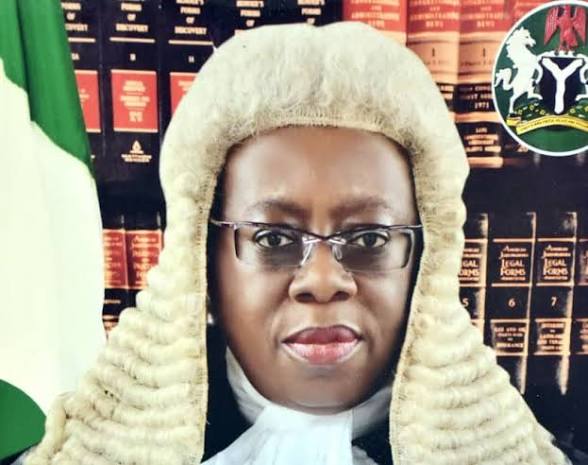
Flags forum shopping, conflicting court orders; demands speedy trials, transparent judicial appointments
The Chief Justice of Nigeria (CJN), Justice Kudirat Kekere-Ekun, has warned judges across the country against allowing politicians to manipulate judicial processes to secure undue advantage ahead of the 2027 general elections.

She specifically cautioned heads of courts against practices capable of undermining the integrity of judicial proceedings, including forum shopping, concealment of related cases and attempts to obtain conflicting orders from courts of coordinate jurisdiction.
The CJN gave the warning on Monday at the opening of the 2026 Roundtable for Heads of Courts, organised by the National Judicial Institute (NJI) in Abuja, where she stressed the need for the judiciary to prepare adequately for the election-related disputes expected to arise as the country approaches another electoral cycle.
Acknowledging that election litigation often attracts intense public interest and considerable pressure on the courts, Justice Kekere-Ekun said judicial officers must discharge their constitutional responsibilities with impartiality, courage and strict adherence to the law.
She warned that political considerations, public sentiment and the urgency attached to applications must never override the proper interpretation and application of the Constitution, the Electoral Act and relevant court rules.
“Political sensitivity, public sentiment or the urgency with which a matter is presented must never displace the careful application of the Constitution, the Electoral Act and the applicable rules of court,” she said.
The CJN urged heads of courts to establish appropriate administrative arrangements for the timely and orderly handling of election-related cases, while ensuring that judicial officers scrutinise applications carefully and demand full disclosure of relevant facts.
She also cautioned against the abuse of urgent applications and ex-parte proceedings to obtain improper advantages, particularly where related cases are already pending before other courts.
“The integrity of judicial proceedings must not be compromised by competing political interests or pressure from any quarter,” she warned.
Describing forum shopping as particularly damaging to the administration of justice, Justice Kekere-Ekun said the practice undermines consistency, encourages abuse of court processes and exposes the judiciary to avoidable public controversy.
She therefore urged heads of courts to ensure strict compliance with existing procedural safeguards and take appropriate steps whenever attempts to circumvent established judicial processes are detected.
“No litigant should be permitted to manipulate the judicial system in search of a favourable decision. Public confidence in the judiciary will be tested during this period,” the CJN added.
She emphasised that heads of courts have a critical leadership responsibility to ensure that election disputes are handled competently, expeditiously and strictly in accordance with the law, with the judiciary remaining an impartial arbiter guided by the evidence, applicable legal principles and the demands of justice.
CJN tackles delays in justice delivery
Beyond the anticipated election disputes, the CJN identified delays in the determination of cases as one of the most pressing challenges confronting the Nigerian judiciary.
She observed that prolonged proceedings impose financial and emotional burdens on litigants, diminish the practical value of judicial remedies and erode public confidence in the justice system.
While acknowledging that inadequate funding, infrastructure and judicial manpower contribute to delays, she said other causes could be addressed through more effective court administration.
According to her, inefficient docket management, repeated adjournments, poor scheduling and failure to monitor inactive cases unnecessarily prolong litigation.
She urged every head of court to maintain a clear understanding of the state of the court’s docket, including the number and age of pending cases, the categories experiencing the greatest delays and the reasons for their continued pendency.
Such information, she said, should guide realistic strategies for reducing case backlogs, allocating hearing dates more effectively and ensuring that concluded matters are promptly removed from active dockets.
The CJN, however, cautioned against measuring judicial efficiency solely by the number of cases disposed of, insisting that speed must not come at the expense of fairness or competence.
“Efficiency, however, must not be measured solely by the number of cases disposed of. It requires cases to be determined fairly, competently and within a reasonable time, with the right to fair hearing fully protected,” she stated.
Judicial appointments must be merit-based
Justice Kekere-Ekun also called on heads of courts to protect the integrity of judicial appointments by ensuring that selection processes are fair, transparent and firmly grounded in merit.
She urged them to resist external pressure and ensure that appointments are based on objective criteria, including competence, character and suitability for judicial office.
“Public confidence in the judiciary depends, in part, on the assurance that those entrusted with judicial office have emerged through rigorous and credible processes,” she said.
The CJN further stressed the importance of maintaining high professional standards, supporting the continuous development of judicial officers and fostering an institutional culture that promotes impartiality and accountability.
Judges must respect litigants, lawyers
The CJN also expressed concern over the inconvenience and financial hardship caused when court sittings are delayed or cancelled without adequate notice to litigants and their lawyers.
She directed heads of courts to establish mechanisms for ensuring that judges commence sittings on time, communicate cancellations promptly and treat all court users with dignity.
She said heads of courts should communicate clear sitting times, monitor compliance and address persistent or unjustified lateness through established supervisory and disciplinary procedures.
Justice Kekere-Ekun described as unacceptable situations in which lawyers and litigants travel long distances at considerable expense, only to discover upon arrival that the court will not sit.
On courtroom conduct, she maintained that judicial authority should be exercised with fairness, composure and respect, regardless of the status or circumstances of those appearing before the court.
“Every litigant, regardless of social status, financial means or education, deserves dignity, while lawyers are entitled to courteous treatment. Firmness and courtesy are entirely compatible. A judge can control proceedings without humiliating counsel or a litigant,” she said.
NJI Administrator seeks collective solutions
Earlier, the Administrator of the NJI, Justice Babatunde Adejumo, said the judiciary, as the custodian of justice and guardian of the rule of law, operates under constant public scrutiny.
He said this placed a significant responsibility on judicial leaders to safeguard the institution’s reputation, strengthen public confidence and promote positive perceptions of the administration of justice.
Justice Adejumo described the annual roundtable as an important platform for candid discussions, the identification of challenges affecting the judiciary and the collective development of practical solutions.
He explained that the programme was deliberately structured to minimise external intervention, allowing heads of courts to lead discussions, exchange experiences and determine the outcomes.
The NJI Administrator also commended the CJN for the reforms she had introduced, which he said had strengthened judicial independence and enhanced integrity across the different levels of the judiciary.
The roundtable comes as the judiciary prepares to confront the legal and institutional demands associated with the 2027 general elections, with the CJN’s message underscoring the importance of impartial adjudication, administrative efficiency, judicial accountability and public confidence in the rule of law.




Court rejects El-Rufai’s no-case submission in alleged phone-tapping trial

2027 Polls: CJN warns judges against political manipulation of courts

Military kills 16 ISWAP fighters in Lake Chad strikes

State Police: 25 Assemblies okay constitutional amendment
CCB probes Obi, Saraki, David Mark, four others over offshore assets

Body of Benchers rejects fresh admission request for NOUN Law graduates

1,117 Katsina Islamic clerics endorse Tinubu’s 2027 re-election bid

Ibadan: The unsung cradle of Nigeria’s newspaper press, by Dr Lasisi Olagunju

The Fake Professor: Nigeria’s obsession with titles, by Hope O’Rukevbe EGHAGHA

Ebola: NCDC tracks 53 contacts as patient’s condition improves

Tinubu appoints ex-DSS DG Yusuf Bichi NISS Governing Board Chairman

Agbakoba, Ojo, Etomi, three others to receive Gavel Lifetime Achievement Awards

Media Trust Group to launch AI-powered converged digital Newsroom

Ex-DSS officer apologises to DG over leaked memo, threatens lawsuit against SaharaReporters
Sanction of Judges: NJC on quiet revolution to cleanse judiciary—Prof Akinseye-George, SAN

Does Nigeria truly have over 103 million voters, asks Prof Chidi Anselm Odinkalu
N2bn Fraud: How Eteta Ita looted FIRS’ funds to service her private school ― Witness

Nollywood mourns as veteran Actor Francis Duru dies at 57
Oyetola, Oyebamiji, others shun inauguration of Adeleke-led Tinubu Campaign Council in Osun

Rivers lawyers give VeryDarkMan seven days to apologise over alleged defamation
-
 General NewsOctober 23 2026
Tinubu appoints ex-DSS DG Yusuf Bichi NISS Governing Board Chairman
-
 Bar and BenchOctober 23 2026
Agbakoba, Ojo, Etomi, three others to receive Gavel Lifetime Achievement Awards
-
 NewsOctober 18 2026
Media Trust Group to launch AI-powered converged digital Newsroom
-
 General NewsOctober 21 2026
Ex-DSS officer apologises to DG over leaked memo, threatens lawsuit against SaharaReporters
-
Bar and BenchMay 2 2025
Sanction of Judges: NJC on quiet revolution to cleanse judiciary—Prof Akinseye-George, SAN
-
 CommentaryOctober 25 2026
Does Nigeria truly have over 103 million voters, asks Prof Chidi Anselm Odinkalu
-
FeaturedMarch 19 2024
N2bn Fraud: How Eteta Ita looted FIRS’ funds to service her private school ― Witness
-
 NewsOctober 23 2026
Nollywood mourns as veteran Actor Francis Duru dies at 57