General News
CCB probes Obi, Saraki, David Mark, four others over offshore assets

The Code of Conduct Bureau (CCB) has commenced investigations into seven Nigerians, including former Anambra State Governor Peter Obi and former Senate Presidents Bukola Saraki and David Mark, over allegations of undeclared offshore assets and business interests.
The other individuals under investigation are former Aviation Minister Stella Oduah, former Delta State Governor James Ibori, the late former Bayelsa State Governor Diepreye Alamieyeseigha and retired Delta State judicial officer Stella Ogene.

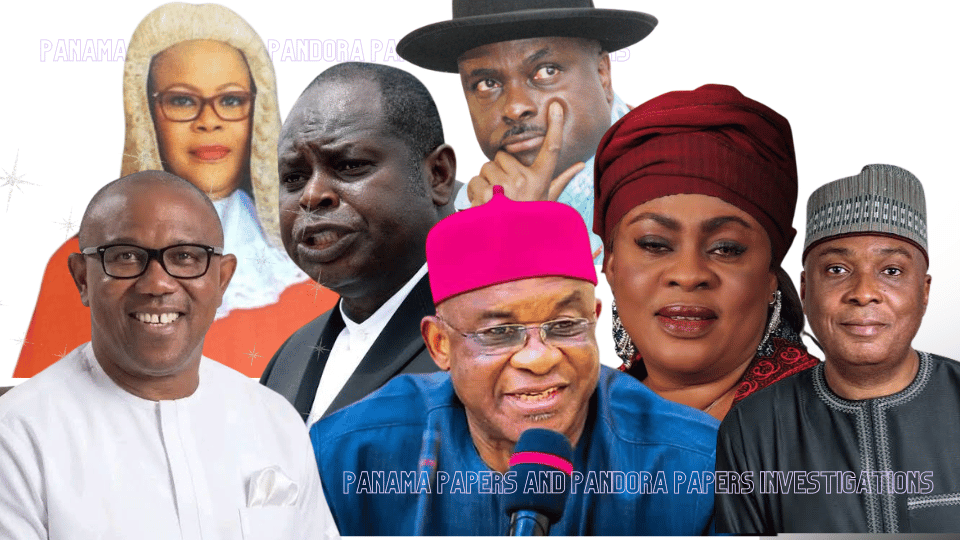
Sources within the bureau confirmed that case officers had been assigned to the seven cases following revelations from the Panama Papers and Pandora Papers investigations, which examined offshore financial arrangements involving public officials and other prominent Nigerians.
“All the Nigerian officials named in the Panama and Pandora papers will be investigated. But seven of them have been assigned to case officers who have already commenced investigations,” a source at the bureau said.
The investigations are expected to establish whether the individuals complied with Nigeria’s laws on asset declaration and restrictions governing the private business interests and foreign bank accounts of public officers.
The allegations are yet to be determined by the bureau, and the commencement of investigations does not establish that any of the individuals has committed an offence.
The development follows renewed engagement between the bureau and journalists involved in the international investigations, after years without a detailed public update on the cases.
In September, the CCB said it was reviewing information and documents relating to the allegations in line with its constitutional and statutory responsibilities. It added that any necessary action would be taken in accordance with due process.
The bureau also indicated that it might invite representatives familiar with the reports to provide further information, while declining to disclose details that could compromise its investigations.
Allegations against Obi
The Pandora Papers investigation published in 2021 reported that Obi retained a directorship in British company NEXT International (UK) Limited for 14 months after becoming governor of Anambra State.
The report also raised questions about certain offshore interests that were allegedly not declared and the operation of a foreign bank account while he was in office.
Obi said he was unaware that assets jointly owned with others were required to be declared. He has also maintained that he did not divert public funds, although the investigation did not accuse him of doing so.
Obi, who has previously contested the Nigerian presidency and remains a prominent figure in national politics, has continued to attract public attention over his political ambitions.
The CCB investigation is separate from electoral disputes over political offices and concerns alleged compliance with the rules governing the conduct of public officers.
Saraki’s previous encounter with the tribunal
Saraki, a former governor of Kwara State and president of the Eighth Senate, was previously prosecuted before the Code of Conduct Tribunal over allegations of false and incomplete asset declarations.
In June 2017, the tribunal discharged and acquitted him after upholding his no-case submission.
The ruling followed a trial that had generated considerable political controversy during his tenure as Senate President.
The new investigation concerns offshore interests reported in the Panama Papers, including corporate structures and assets linked to members of his family.
The investigation reported that certain assets associated with his wife, Toyin Saraki, were held through offshore companies and raised questions about whether relevant interests had been declared as required by law.
The current inquiry is distinct from the earlier tribunal case and does not, by itself, overturn or reopen the outcome of that trial.
David Mark, Oduah also under investigation
The Panama Papers investigation linked Mark, another former Senate President, to at least eight companies registered in the British Virgin Islands while he held public office.
Records from Mossack Fonseca, the Panamanian law firm at the centre of the leak, reportedly identified Mark as a politically exposed person and showed that he supplied documents to establish his identity.
However, the investigation did not establish the nature of the businesses conducted through the companies.
Mark has remained a prominent figure in Nigerian politics after his years in the Senate, including his emergence in the leadership of the African Democratic Congress (ADC) amid political realignments ahead of the 2027 general elections.
Oduah, a former aviation minister who later represented Anambra North in the Senate, was linked by the Pandora Papers investigation to seven London properties, including four reportedly valued at £6.7 million and acquired through an offshore company incorporated in Seychelles.
The investigation also raised questions about her business interests while serving as a public officer.
The CCB is expected to determine whether the reported arrangements breached applicable provisions of the Code of Conduct for Public Officers.
Ibori, Alamieyeseigha and Ogene
The investigation also includes Ibori, the former Delta governor whose political career was overshadowed by his conviction in the United Kingdom for money laundering and conspiracy to defraud.
He was sentenced to 13 years in prison in 2012 after pleading guilty to the offences.
The Panama Papers investigation linked the late Alamieyeseigha, who governed Bayelsa State from 1999 until his impeachment in 2005, to offshore companies, overseas properties and foreign bank accounts.
British authorities returned more than £5 million recovered from funds associated with the former governor to the Bayelsa State Government in 2012.
The seventh person under investigation, Ogene, is a retired judicial officer who headed the Delta State Customary Court of Appeal for 21 years.
The Pandora Papers investigation reported that she established an offshore company in Seychelles in 2009 to acquire a London property.
Documents examined by the investigators identified her as the company’s beneficial owner, director and secretary.
What the law provides
Nigeria’s Code of Conduct framework requires public officers covered by its provisions to declare their assets and comply with restrictions on private business activities and foreign bank accounts.
The rules also require declarations covering the assets of spouses and children below the age of 18.
Although offshore companies can be established for legitimate commercial purposes, failure by a public officer to disclose relevant interests or comply with applicable restrictions may raise questions under Nigerian law.
The CCB is empowered to investigate alleged breaches and, where appropriate, bring cases before the Code of Conduct Tribunal.
The bureau’s latest action could therefore determine whether the allegations arising from the international investigations warrant further legal proceedings.
The investigations may also extend to other Nigerians identified in the Panama Papers and Pandora Papers.
For now, the seven cases remain under investigation, with the outcome dependent on the evidence examined by the bureau and any subsequent proceedings.




For Festus Keyamo: Heavens may not fall but the sky can recede, by Prof Chidi Anselm Odinkalu

INEC’s trust deficit deepens as London protesters confront Amupitan over 2027 voter register

FG secures 2,512 terrorism convictions after 11 trial phases, raises questions over years of delayed prosecutions

SAN Rank: NLS renews demand for publication of candidates’ scores, sparks transparency debate

Ibori loses £136m asset forfeiture appeal in UK, reignites questions over 2009 Nigerian acquittal

Nigerian-trained Dapo Akande elected to World Court, joins distinguished league of Nigerian legal giants

2027: Why I backed Tinubu in 2023 but now want to unseat him – Makinde

EFCC alleges Emefiele acquired billions in properties through proxies, collected $17m gratification

Six years after jumping bail, Maina’s son to begin seven-year jail term

FG scraps 269 obsolete laws, consolidates 663 enactments in proposed LFN 2025

Sanction of Judges: NJC on quiet revolution to cleanse judiciary—Prof Akinseye-George, SAN

BREAKING: NJC recommends 28 for judicial appointments, suspends three judges

Tinubu appoints ex-DSS DG Yusuf Bichi NISS Governing Board Chairman
5,000 academics to endorse Tinubu’s re-election bid in November

Presidency seeks private sector funding for state Police

Agbakoba, Ojo, Etomi, three others to receive Gavel Lifetime Achievement Awards

Media Trust Group to launch AI-powered converged digital Newsroom

Opene v NJC: That S’Court landmark ruling on NJC’s disciplinary powers over judges, by Ebun-Olu Adegboruwa,SAN

Tinubu seeks Senate approval for fresh N10.79trn foreign loan amid debt controversy
APC expels Rauf Aregbesola
-
 FeaturedMay 2 2025
Sanction of Judges: NJC on quiet revolution to cleanse judiciary—Prof Akinseye-George, SAN
-
 FeaturedNovember 4 2026
BREAKING: NJC recommends 28 for judicial appointments, suspends three judges
-
 General NewsOctober 23 2026
Tinubu appoints ex-DSS DG Yusuf Bichi NISS Governing Board Chairman
-
FeaturedNovember 3 2026
5,000 academics to endorse Tinubu’s re-election bid in November
-
 NewsOctober 28 2026
Presidency seeks private sector funding for state Police
-
 Bar and BenchOctober 23 2026
Agbakoba, Ojo, Etomi, three others to receive Gavel Lifetime Achievement Awards
-
 NewsOctober 18 2026
Media Trust Group to launch AI-powered converged digital Newsroom
-
 FeaturedOctober 27 2026
Opene v NJC: That S’Court landmark ruling on NJC’s disciplinary powers over judges, by Ebun-Olu Adegboruwa,SAN