Politics
1,117 Katsina Islamic clerics endorse Tinubu’s 2027 re-election bid

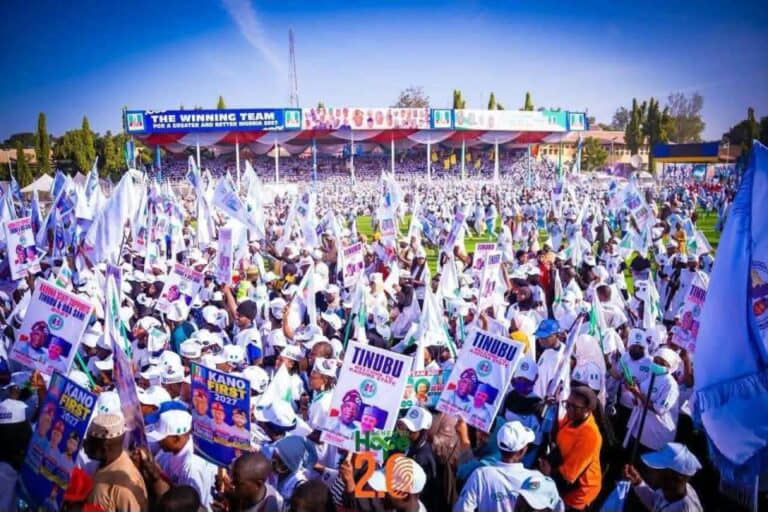
No fewer than 1,117 Islamic clerics belonging to the Izala and Tijjaniyya groups in Katsina State have endorsed President Bola Tinubu’s bid for a second term in office in 2027.
The clerics, comprising Islamic scholars, imams, male and female preachers, and teachers, declared their support on Sunday at a gathering organised by Ibrahim Masari, the President’s adviser on political matters.

Masari conveyed Tinubu’s appreciation to the clerics, assuring them that the President and his administration would not betray the confidence reposed in them by the people of Katsina State.
He urged the religious leaders to mobilise their followers to support the All Progressives Congress (APC) at all levels ahead of the 2027 general elections.
Masari also stressed the importance of trust, integrity and accountability in leadership, urging Islamic scholars to uphold truthfulness and responsible conduct in their religious and public engagements.
Similarly, the Minister of Housing and Urban Development, Muttaqa Rabe-Darma, called on the clerics to use their influence within their communities to explain the administration’s policies and political agenda.
He described Islamic scholars as influential figures whose sermons and regular interactions with worshippers could shape public understanding of political issues and leadership choices.
Rabe-Darma noted that politicians across party lines often sought the blessings and support of religious leaders, highlighting their influence in society.
He encouraged the clerics to use their platforms, particularly Friday sermons and community engagements, to explain their support for Tinubu’s second-term bid.
The minister said religious leaders had an important role to play in political mobilisation because many communities relied on their guidance on religious, social and public affairs.
In his remarks, Sheikh Aminu Usman, popularly known as Abu Ammar and the state’s immediate past Hisbah commander, urged Islamic scholars not to remain silent on political matters.
He said their responsibilities extended beyond religious activities to educating the public on leadership and governance.
Citing Islamic teachings on the relationship between religious scholarship and leadership, Usman urged clerics to enlighten their followers about political candidates.
He also called on citizens to assess political leaders based on their records and performance, stressing that religious leaders should speak truthfully about political developments.
Usman said clerics had a responsibility to help citizens make informed choices as political activities gathered momentum ahead of the 2027 general elections.
NAN




Court freezes N135.5bn linked to Governors’ Forum over Paris Club refund dispute

When private marital matters become public spectacles, by Hassan Gimba

Inside Nigeria’s Kidnap Economy: How terrorists, bandits, informants launder billions in ransom

‘Coconut Judge’: Odinkalu accuses NBA of selective enforcement of professional ethics, by Chidi Anselm Odinkalu
For Festus Keyamo: Heavens may not fall but the sky can recede, by Prof Chidi Anselm Odinkalu

INEC’s trust deficit deepens as London protesters confront Amupitan over 2027 voter register
FG secures 2,512 terrorism convictions after 11 trial phases, raises questions over years of delayed prosecutions

SAN Rank: NLS renews demand for publication of candidates’ scores, sparks transparency debate

Ibori loses £136m asset forfeiture appeal in UK, reignites questions over 2009 Nigerian acquittal

Nigerian-trained Dapo Akande elected to World Court, joins distinguished league of Nigerian legal giants

Sanction of Judges: NJC on quiet revolution to cleanse judiciary—Prof Akinseye-George, SAN

BREAKING: NJC recommends 28 for judicial appointments, suspends three judges

Tinubu appoints ex-DSS DG Yusuf Bichi NISS Governing Board Chairman
5,000 academics to endorse Tinubu’s re-election bid in November

Agbakoba, Ojo, Etomi, three others to receive Gavel Lifetime Achievement Awards

Presidency seeks private sector funding for state Police

Media Trust Group to launch AI-powered converged digital Newsroom

Opene v NJC: That S’Court landmark ruling on NJC’s disciplinary powers over judges, by Ebun-Olu Adegboruwa,SAN
APC expels Rauf Aregbesola
N2bn Fraud: How Eteta Ita looted FIRS’ funds to service her private school ― Witness
-
 FeaturedMay 2 2025
Sanction of Judges: NJC on quiet revolution to cleanse judiciary—Prof Akinseye-George, SAN
-
 FeaturedNovember 4 2026
BREAKING: NJC recommends 28 for judicial appointments, suspends three judges
-
 General NewsOctober 23 2026
Tinubu appoints ex-DSS DG Yusuf Bichi NISS Governing Board Chairman
-
FeaturedNovember 3 2026
5,000 academics to endorse Tinubu’s re-election bid in November
-
 Bar and BenchOctober 23 2026
Agbakoba, Ojo, Etomi, three others to receive Gavel Lifetime Achievement Awards
-
 NewsOctober 28 2026
Presidency seeks private sector funding for state Police
-
 NewsOctober 18 2026
Media Trust Group to launch AI-powered converged digital Newsroom
-
 FeaturedOctober 27 2026
Opene v NJC: That S’Court landmark ruling on NJC’s disciplinary powers over judges, by Ebun-Olu Adegboruwa,SAN