Featured
Body of Benchers rejects fresh admission request for NOUN Law graduates

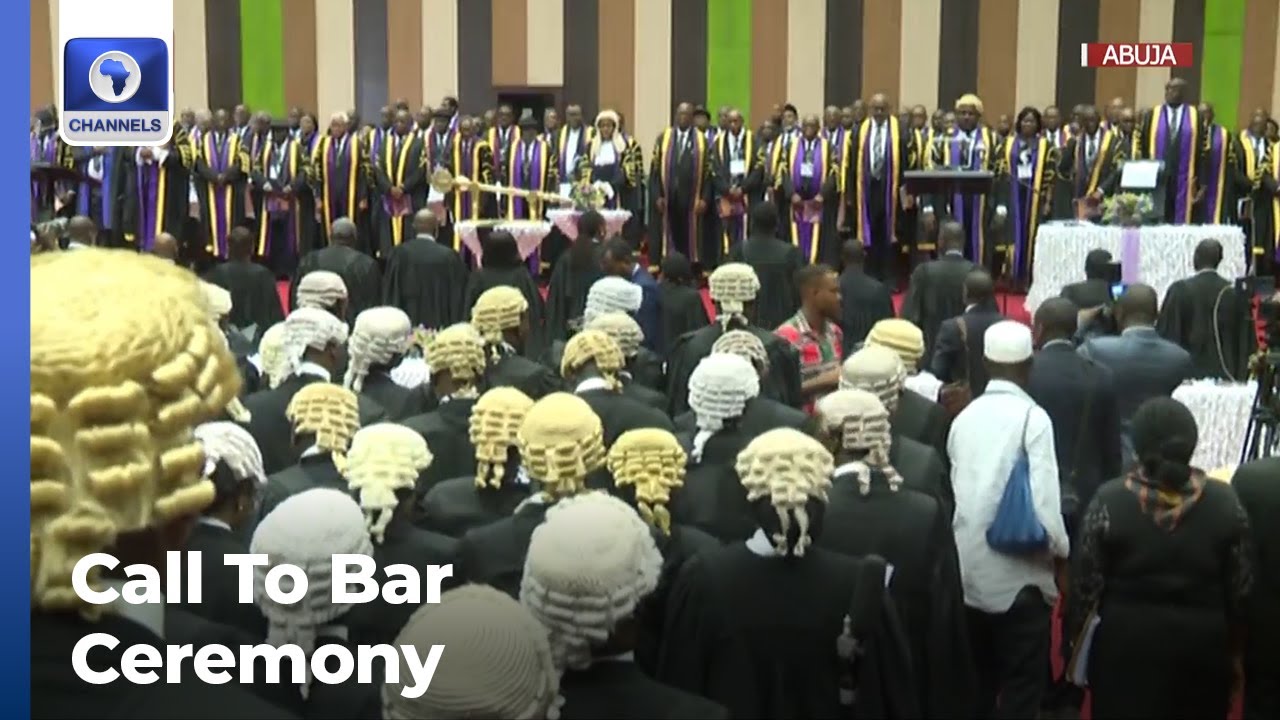
- More than 5,000 graduates remain caught in protracted dispute over access to Nigerian Law School
The Body of Benchers has rejected a fresh request by the National Open University of Nigeria (NOUN) for its outstanding law graduates to be admitted into the Nigerian Law School, insisting that its 2020 approval for 1,883 graduates was a one-off arrangement.
In a letter dated September 15, 2026, addressed to NOUN Vice-Chancellor, Prof. Uduma Oji Uduma, the Body said it had considered the university’s request but resolved to maintain its earlier position.

The letter, signed by the Secretary of the Body of Benchers, Daniel M. Tela, stated that the 1,883 graduates whose names were submitted by NOUN had been approved by the relevant stakeholders under a special arrangement that was not intended to accommodate subsequent batches.
According to the Body, NOUN was also expected not to admit additional students into its Faculty of Law.
“This letter represents the final position of the Body of Benchers on this matter,” Tela stated.
The decision comes amid a prolonged dispute over the eligibility of NOUN law graduates for professional legal training, with more than 5,000 affected graduates reportedly seeking intervention from the National Assembly to enable them to proceed to the Nigerian Law School and qualify for Call to Bar.
The House of Representatives Committee on Public Petitions recently invited NOUN and the Nigerian Law School to explain the circumstances surrounding the impasse.
Neither institution attended the scheduled hearing on September 16, although both submitted explanations and requested another date.
A dispute dating back more than a decade
The controversy over NOUN law graduates’ admission into the Nigerian Law School has persisted for years, leaving successive batches of graduates unable to proceed to the professional training required to practise law in Nigeria.
The dispute stems from disagreements over the university’s law programme and whether its graduates met the requirements for admission into the Nigerian Law School.
According to NOUN’s account submitted to the House committee, the university suspended fresh admissions into its Bachelor of Laws (LLB) programme in 2015 after the Council of Legal Education rejected the admission of its graduates into the Nigerian Law School.
The university subsequently engaged the Council and other stakeholders in an effort to resolve the disagreement.
In 2019, NOUN submitted a list of 1,883 graduates for consideration. The university later said it discovered that 90 names had been omitted, bringing the number of graduates represented by the submission to 1,973.
In 2020, the Body of Benchers approved a special remedial programme for the graduates rather than granting them direct admission into Bar Part II, the route ordinarily followed by eligible law graduates of conventional Nigerian universities.
The arrangement enabled some NOUN graduates to progress towards qualification as lawyers.
In 2025, the university reported that 203 of its law graduates were among those called to the Nigerian Bar that year.
However, subsequent batches of graduates were not covered by the special arrangement, triggering renewed appeals for their admission into the Nigerian Law School.
NOUN disputes allegation of fresh admissions
One of the major points of disagreement concerns a subsequent batch of 2,226 graduates submitted by NOUN on May 13, 2022.
The university maintains that the affected students were admitted into its law programme before the suspension of admissions in 2015 but completed their studies later.
According to NOUN’s account to the House committee, the Council of Legal Education rejected the subsequent submission, citing, among other concerns, its position that the university had continued admitting students after 2015.
NOUN disputes that allegation
The disagreement has left thousands of graduates in an uncertain position, having completed their academic programmes without a clear pathway to the professional training required for entry into the legal profession.
The affected graduates have argued that they should not suffer the consequences of disagreements between regulatory institutions over the status and history of the university’s law programme.
Their campaign has included petitions and public protests.
In July, members of the group protested at the National Assembly and the office of the Attorney-General of the Federation, calling for government intervention.
Benchers refer admission responsibility to Council
In its latest letter, the Body of Benchers maintained that its 2020 approval was limited to the original list of graduates submitted by NOUN and was expressly treated as a one-off exercise.
It also drew a distinction between its statutory responsibilities and those of the Council of Legal Education.
According to the Body, its responsibilities include calling qualified aspirants to the Bar and disciplining erring lawyers, while admission into the Nigerian Law School falls within the purview of the Council of Legal Education.
The distinction is significant because the Body’s rejection of NOUN’s latest request does not, in itself, constitute an admission decision on every outstanding graduate.
Rather, it confirms the Body’s position that its earlier special arrangement cannot be extended through a fresh approval from it.
The Nigerian Law School was established under the Legal Education Act 1962, now known as the Legal Education (Consolidation, etc.) Act, while the Council of Legal Education is responsible for the professional legal education of candidates seeking entry into the legal profession.
With the Body of Benchers declaring its position final, attention is likely to remain on the Council of Legal Education and the ongoing intervention by the House of Representatives.
Thousands await a resolution
For the affected graduates, the institutional distinction offers little immediate relief.
More than 5,000 NOUN law graduates are reportedly awaiting a route into the Nigerian Law School, according to the association representing their interests.
Their predicament raises questions about the relationship between university education, professional accreditation and access to regulated professions, particularly where students have completed their academic studies but cannot proceed to the next stage of qualification.
The House of Representatives’ intervention provides an opportunity for the relevant institutions to explain their respective positions and explore a resolution.
However, the Body of Benchers’ September 15 letter has made clear that it will not reconsider its 2020 approval as a general admission arrangement for subsequent graduates.
The central question is now whether the Council of Legal Education, NOUN and other relevant authorities can agree on a lawful and workable pathway for the outstanding graduates.
Until the dispute is resolved, thousands of NOUN law graduates face continued uncertainty over when, or under what conditions, they will be able to undertake professional legal training and qualify for Call to Bar.




Body of Benchers rejects fresh admission request for NOUN Law graduates

1,117 Katsina Islamic clerics endorse Tinubu’s 2027 re-election bid

Ibadan: The unsung cradle of Nigeria’s newspaper press, by Dr Lasisi Olagunju

The Fake Professor: Nigeria’s obsession with titles, by Hope O’Rukevbe EGHAGHA

Ebola: NCDC tracks 53 contacts as patient’s condition improves

Tope Alabi threatens legal action against Canada-based pastor over Toluwanisings’ death

Rivers lawyers give VeryDarkMan seven days to apologise over alleged defamation
Tinubu kicks off 2027 re-election campaign in Kaduna, seeks fresh mandate

Does Nigeria truly have over 103 million voters, asks Prof Chidi Anselm Odinkalu

Nigeria’s Ebola case linked to Kenya strain–FG

Tinubu appoints ex-DSS DG Yusuf Bichi NISS Governing Board Chairman

Agbakoba, Ojo, Etomi, three others to receive Gavel Lifetime Achievement Awards

Media Trust Group to launch AI-powered converged digital Newsroom

Ex-DSS officer apologises to DG over leaked memo, threatens lawsuit against SaharaReporters
Does Nigeria truly have over 103 million voters, asks Prof Chidi Anselm Odinkalu
Sanction of Judges: NJC on quiet revolution to cleanse judiciary—Prof Akinseye-George, SAN
N2bn Fraud: How Eteta Ita looted FIRS’ funds to service her private school ― Witness
A First generation bank employee on the run after diverting ₦40bn — Report

Nollywood mourns as veteran Actor Francis Duru dies at 57
Oyetola, Oyebamiji, others shun inauguration of Adeleke-led Tinubu Campaign Council in Osun
-
 General NewsOctober 23 2026
Tinubu appoints ex-DSS DG Yusuf Bichi NISS Governing Board Chairman
-
 Bar and BenchOctober 23 2026
Agbakoba, Ojo, Etomi, three others to receive Gavel Lifetime Achievement Awards
-
 NewsOctober 18 2026
Media Trust Group to launch AI-powered converged digital Newsroom
-
 General NewsOctober 21 2026
Ex-DSS officer apologises to DG over leaked memo, threatens lawsuit against SaharaReporters
-
Bar and BenchMay 2 2025
Sanction of Judges: NJC on quiet revolution to cleanse judiciary—Prof Akinseye-George, SAN
-
 CommentaryOctober 25 2026
Does Nigeria truly have over 103 million voters, asks Prof Chidi Anselm Odinkalu
-
FeaturedMarch 19 2024
N2bn Fraud: How Eteta Ita looted FIRS’ funds to service her private school ― Witness
-
CrimeJune 1 2024
A First generation bank employee on the run after diverting ₦40bn — Report