Featured
2027: Why I backed Tinubu in 2023 but now want to unseat him – Makinde

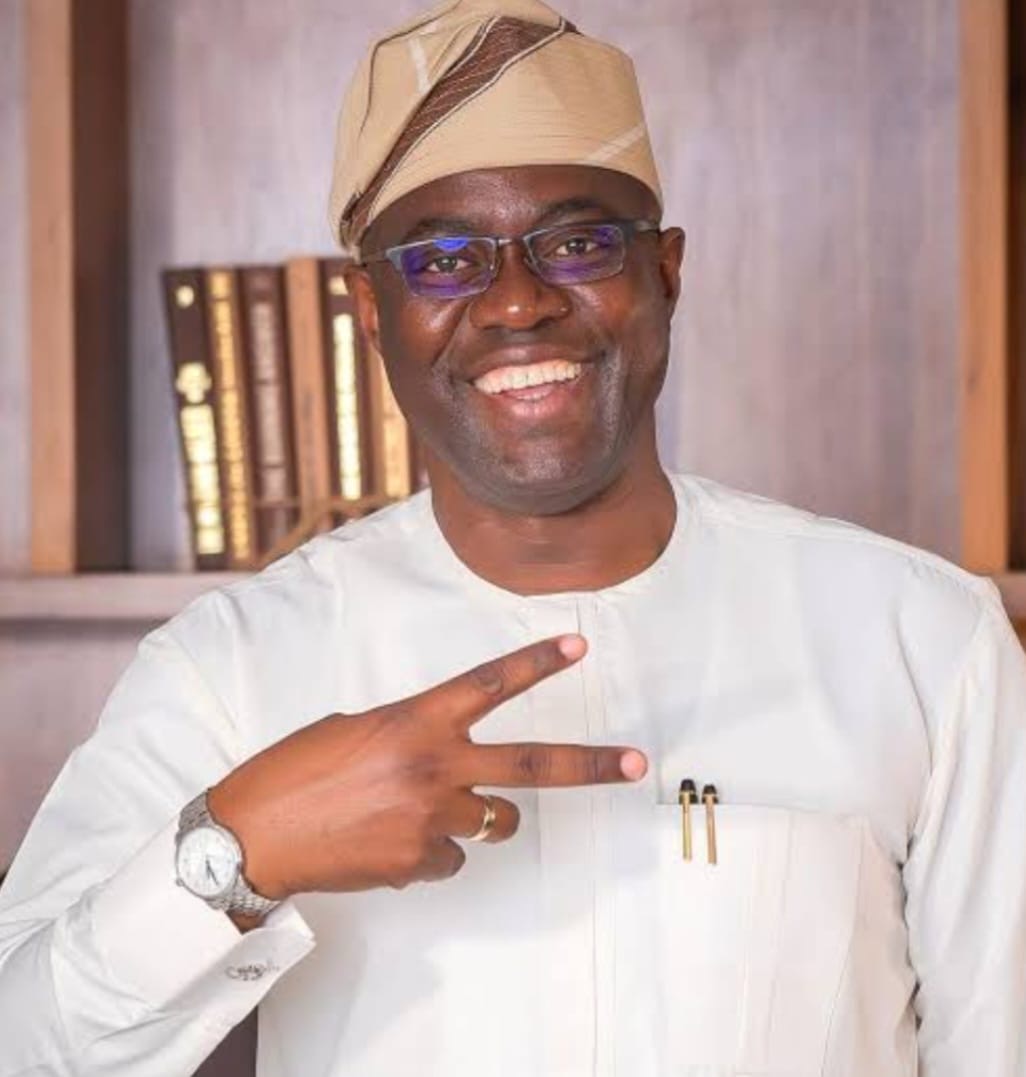
Oyo State Governor and presidential candidate of the Allied Peoples Movement (APM), Seyi Makinde, has explained why he supported President Bola Tinubu’s emergence in 2023 but is now seeking to defeat him in the January 2027 presidential election, citing what he described as failures of governance, economic hardship and the weakening of national unity.
Makinde’s explanation comes amid an escalating political confrontation between him and the ruling All Progressives Congress (APC), which he recently accused of appropriating ideas from his RESET Nigeria manifesto for its own 2027 presidential campaign document.

The governor had alleged that the ruling party began copying his ideas shortly after he unveiled his manifesto on November 4, particularly its message of building a Nigeria that works for everybody.
At an APM presidential campaign rally in Jos, Plateau State, on November 9, Makinde accused the APC of adopting the language of his political agenda while failing to demonstrate that its policies had improved the lives of Nigerians.
The controversy intensified after the APC unveiled its manifesto, titled From Reforms to Prosperity: Agenda 2027–2031, on November 10.
Makinde’s campaign organisation subsequently accused Tinubu and the APC of intellectual appropriation, specifically pointing to the ruling party’s use of the expression, “a Nigeria that works for all Nigerians”, which it described as a central message of the APM candidate’s RESET Nigeria vision.
The campaign organisation argued that adopting the language of Makinde’s manifesto did not automatically confer on the ruling party the capacity to implement its proposals.
Against this backdrop, Makinde, in a newsletter issued on Thursday, revisited the circumstances surrounding his support for Tinubu in the 2023 presidential election and explained why he had since changed his political position.
He insisted that his decision to challenge the President was neither borne out of a personal disagreement nor desperation to occupy the nation’s highest political office, but was informed by concerns about Nigeria’s future.
“I supported President Tinubu in 2023 because I believed his experience and political relationships could help him bring Nigerians together.
“One thing I have always acknowledged about him is his ability to build bridges across political divides. I believed he could use that ability to establish a government of national unity and competence, focused on improving the lives of Nigerians,” he said.
However, the governor identified four major developments that, according to him, had eroded his confidence in the Tinubu administration.
His first concern was what he described as economic stabilisation without corresponding development.
While acknowledging that some macroeconomic indicators might have improved under Tinubu, Makinde argued that such improvements had not translated into better living conditions for ordinary Nigerians.
He faulted the administration’s approach of treating economic stabilisation as a prerequisite for development, insisting that both should have been pursued simultaneously.
“Contrary to the formula President Tinubu claims to be following, economic stabilisation and development are not necessarily sequential. Nigerians did not have to endure this level of hardship while waiting for development to begin,” he said.
His second concern was what he characterised as the administration’s tendency to blame inherited challenges for its shortcomings.
Makinde argued that although every government inherited problems from its predecessor, the responsibility of an elected administration was to provide solutions rather than continually explain the circumstances that produced the challenges.
“Every government inherits problems, but it is elected to solve them. Over three years into this administration, we are still hearing explanations about inherited poverty, insecurity, electricity problems and other challenges, when Nigerians should be seeing more measurable progress,” he said.
The third issue was what he described as the weakening of national unity through political alliances designed primarily to consolidate power.
Makinde recalled that one of his expectations when he supported Tinubu was that the President would deploy his political experience and ability to build bridges across party lines to assemble a government of national competence.
He, however, alleged that the administration had increasingly prioritised political interests over national cohesion.
“Instead, I have come to believe that his political alliances serve his political objectives more than the national interest, and I am deeply concerned about the weakening of opposition parties, which are essential to a functioning democracy,” he said.
His fourth concern was the implementation of economic reforms without adequate measures to protect citizens from their immediate consequences.
Although he supported the removal of petrol subsidy and reforms in the foreign exchange market, Makinde argued that the government failed to sufficiently prepare for the economic hardship the policies would impose on households and businesses.
Explaining what he would have done differently, the governor said he would have used the presidential transition period to develop cushioning measures in consultation with state governors through the National Economic Council.
He recalled that Tinubu had opposed the abrupt removal of petrol subsidy by former President Goodluck Jonathan in 2012 and had also witnessed the petrol and naira scarcity that preceded the 2023 general election.
According to Makinde, those experiences should have provided sufficient warning about the consequences of implementing major economic reforms without adequate preparation.
“I would have used the presidential transition period to prepare for subsidy removal,” he said.
To demonstrate what he considered a more people-oriented approach to governance, Makinde cited interventions introduced by his administration in Oyo State following the removal of petrol subsidy in May 2023.
He said that within 11 days of the announcement, his government deployed additional Omituntun buses, maintained existing transport fares and introduced half-price fares for students and senior citizens.
He added that in August 2023, the state introduced the Sustainable Actions for Economic Recovery (SAfER) programme, which provided food assistance to 200,000 vulnerable households, transport subsidies and support for small businesses and farmers.
“Our approach was simple: provide immediate relief while developing measures to help people earn a living,” he said.
Makinde, who declared his presidential ambition on May 14, 2026, said he was unwilling to defer his intervention in national politics until 2031 or 2035, considering the shrinking opportunities for young Nigerians and the growing economic difficulties confronting households.
He argued that the consequences of federal policies often undermine the progress made by state governments, making it necessary for competent leadership at the national level.
The governor consequently urged Nigerians to assess his record in Oyo State alongside the policy proposals contained in his RESET Nigeria Agenda before deciding which candidate deserves their support in 2027.
He said his candidacy was an invitation to Nigerians to examine an alternative approach to governance rather than accept political promises without scrutiny.
“I am not asking you to trust me blindly. I am asking you to examine what I am proposing and decide whether it offers a credible path towards the Nigeria we all deserve,” he said.
He added: “Because the Nigeria that gave me the opportunity to live my dreams should not become a country where our children can no longer dream.”
The governor also urged Nigerians not to lose faith in the electoral process, insisting that the 2027 election offered an opportunity to redirect the country’s political and economic trajectory.




2027: Why I backed Tinubu in 2023 but now want to unseat him – Makinde

EFCC alleges Emefiele acquired billions in properties through proxies, collected $17m gratification

Six years after jumping bail, Maina’s son to begin seven-year jail term

FG scraps 269 obsolete laws, consolidates 663 enactments in proposed LFN 2025

2027 Polls: Electoral Act 2026, judiciary and the test of Nigeria’s democracy, by Ebun-Olu Adegboruwa, SAN

2027: Makinde accuses APC of stealing ideas from his nine-page manifesto as Tinubu unveils 109-page agenda

Imo APC Crisis: Uzodimma, Okorocha power struggle threatens Tinubu’s 2027 re-election chances

30 Years Behind Bars: The agony of inmates waiting for justice, by Pastor Hezekiah Olujobi

INEC expunges 1.6m irregular voter records, identifies 54 officials for prosecution

Sowore suffers fresh setback as court orders him to open defence in cybercrime trial

Sanction of Judges: NJC on quiet revolution to cleanse judiciary—Prof Akinseye-George, SAN

BREAKING: NJC recommends 28 for judicial appointments, suspends three judges

5,000 academics to endorse Tinubu’s re-election bid in November
Tinubu appoints ex-DSS DG Yusuf Bichi NISS Governing Board Chairman

Presidency seeks private sector funding for state Police

Agbakoba, Ojo, Etomi, three others to receive Gavel Lifetime Achievement Awards

Media Trust Group to launch AI-powered converged digital Newsroom

Opene v NJC: That S’Court landmark ruling on NJC’s disciplinary powers over judges, by Ebun-Olu Adegboruwa,SAN

Tinubu seeks Senate approval for fresh N10.79trn foreign loan amid debt controversy

Does Nigeria truly have over 103 million voters, asks Prof Chidi Anselm Odinkalu
-
 FeaturedMay 2 2025
Sanction of Judges: NJC on quiet revolution to cleanse judiciary—Prof Akinseye-George, SAN
-
 FeaturedNovember 4 2026
BREAKING: NJC recommends 28 for judicial appointments, suspends three judges
-
 FeaturedNovember 3 2026
5,000 academics to endorse Tinubu’s re-election bid in November
-
General NewsOctober 23 2026
Tinubu appoints ex-DSS DG Yusuf Bichi NISS Governing Board Chairman
-
 NewsOctober 28 2026
Presidency seeks private sector funding for state Police
-
 Bar and BenchOctober 23 2026
Agbakoba, Ojo, Etomi, three others to receive Gavel Lifetime Achievement Awards
-
 NewsOctober 18 2026
Media Trust Group to launch AI-powered converged digital Newsroom
-
 FeaturedOctober 27 2026
Opene v NJC: That S’Court landmark ruling on NJC’s disciplinary powers over judges, by Ebun-Olu Adegboruwa,SAN