Bar and Bench
Imo AG faults NJC directive on Chief Judge shortlist

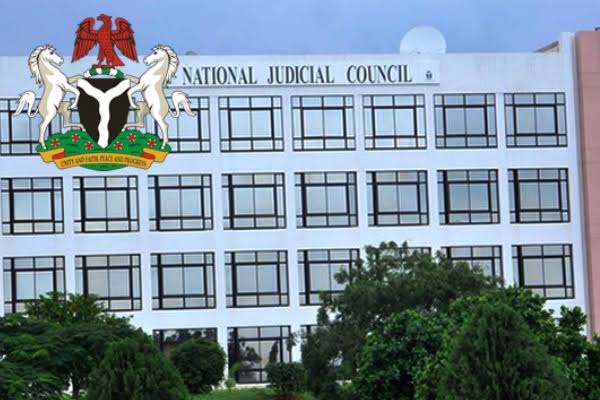
The Imo State Attorney-General and Commissioner for Justice, Paul Obinatu, has challenged the authority of the National Judicial Council (NJC) to direct the State Judicial Service Commission (JSC) to include the name of the state’s most senior High Court judge, Justice Ijeoma Agugua, on the shortlist of candidates for appointment as substantive Chief Judge.
Obinatu, who described the directive as an infringement on the constitutional independence of the State JSC, argued that the NJC’s power to recommend a candidate for appointment by the Governor does not extend to determining who the State Commission must nominate.

The Attorney-General made the position known in a statement on Saturday while reacting to a directive issued by the NJC at its 112th meeting held on November 3, 2026, concerning the appointment of a substantive Chief Judge for Imo State.
At the meeting, the Council directed its Secretariat to formally request the Imo State JSC to include Justice Agugua, the Acting Chief Judge and most senior judge of the State High Court, among the candidates shortlisted for consideration for the substantive position.
The directive followed the consideration of a petition dated June 11, 2026, by Bob Kay Njemanze, who challenged the exclusion of Justice Agugua from the shortlist earlier submitted by the State JSC.
In considering the petition, the NJC acknowledged the constitutional responsibility of the State JSC to advise it on suitable candidates for appointment as Chief Judge but maintained that it retained the authority to determine the suitability of candidates presented to it.
The Council consequently directed its Secretariat to formally communicate its position to the Imo State JSC, requesting the inclusion of Justice Agugua in the shortlist.
However, Obinatu maintained that the directive amounted to an attempt by the NJC to interfere with the independent functions of the State Commission.
Citing Section 202 of the 1999 Constitution, as amended, he argued that a State Judicial Service Commission was not subject to the direction or control of any other authority or person in exercising its constitutional responsibilities.
He said the provision protected the Imo JSC’s independence in assessing and recommending candidates for judicial appointments.
“Any directive requiring the State JSC to submit a particular candidate or dictating the outcome of its independent assessment would amount to unconstitutional interference,” he said.
The Attorney-General further relied on Paragraph 6(a), Part II of the Third Schedule to the Constitution, which empowers a State Judicial Service Commission to advise the NJC on suitable candidates for appointment as Chief Judge.
He also cited Paragraph 21(c), Part I of the same Schedule, which empowers the NJC to recommend a candidate to the Governor from among the names submitted to it.
According to him, Section 271(1) of the Constitution also provides that the Governor appoints a Chief Judge on the recommendation of the NJC, subject to confirmation by the State House of Assembly.
“The NJC’s constitutional responsibility to recommend a candidate to the Governor does not confer on it the additional power to determine or dictate the candidate the State Judicial Service Commission must submit to it,” he said.
Obinatu also rejected the suggestion that the NJC’s Guidelines and Procedural Rules for the Appointment of Judicial Officers could justify the directive, arguing that administrative guidelines could not override constitutional provisions or confer powers not expressly granted by the Constitution.
He cited the Supreme Court decisions in Elelu-Habeeb v. Attorney-General of the Federation (2012), Bamisile v. National Judicial Council (2012) and Attorney-General of the Federation v. Attorney-General of Abia State (2024), insisting that constitutional institutions must operate within the limits of their respective powers.
The Attorney-General stressed that his objection was not a contest for institutional superiority between the NJC and the State JSC but a matter of preserving the constitutional boundaries of both institutions.
“The issue is not a contest for institutional superiority between the NJC and the State JSC, but the need for each institution to respect the constitutional boundaries of its authority,” he said.
He warned that allowing the NJC to assume functions constitutionally reserved for the State Commission could undermine the integrity of the appointment process and erode public confidence in the judiciary.
The controversy adds another dimension to the prolonged disagreement surrounding the appointment of a substantive Chief Judge for Imo State, following the exclusion of Justice Agugua, the state’s most senior High Court judge, from the initial shortlist.
Justice Agugua currently occupies the position in an acting capacity, while the NJC’s latest intervention is aimed at ensuring that she is also considered in the process leading to the appointment of a substantive Chief Judge.



Imo AG faults NJC directive on Chief Judge shortlist

Counterfeit products: A deadly trade claiming Nigerian lives, by Kazeem Akintunde

Tinubu’s ‘ex-lecturer’ raises fresh questions over Chicago varsity education

ADC will contest 2027, but Atiku may be excluded – Keyamo

The labour congress/trade union squabble, by Monday Ekpe, PhD

ADC Judgment: In defence of Lifu’s ruling, Federal High Court leadership, by Kayode Ajulo, SAN

Problems with that ‘Middle Belt’ parley with Tinubu, by Danlami Nagari Sani

EFCC: Adeboye ordered return of billions traced to RCCG projects within 24 hours

Law School begins screening for Bar resit candidates ahead of November 26 Call to Bar

PIA at Five: Odinkalu urges presidential candidates to prioritise energy security

Sanction of Judges: NJC on quiet revolution to cleanse judiciary—Prof Akinseye-George, SAN
5,000 academics to endorse Tinubu’s re-election bid in November

BREAKING: NJC recommends 28 for judicial appointments, suspends three judges
Tinubu appoints ex-DSS DG Yusuf Bichi NISS Governing Board Chairman

Presidency seeks private sector funding for state Police

Agbakoba, Ojo, Etomi, three others to receive Gavel Lifetime Achievement Awards

Media Trust Group to launch AI-powered converged digital Newsroom

Opene v NJC: That S’Court landmark ruling on NJC’s disciplinary powers over judges, by Ebun-Olu Adegboruwa,SAN
Does Nigeria truly have over 103 million voters, asks Prof Chidi Anselm Odinkalu

Ex-DSS officer apologises to DG over leaked memo, threatens lawsuit against SaharaReporters
-
 FeaturedMay 2 2025
Sanction of Judges: NJC on quiet revolution to cleanse judiciary—Prof Akinseye-George, SAN
-
 FeaturedNovember 3 2026
5,000 academics to endorse Tinubu’s re-election bid in November
-
 FeaturedNovember 4 2026
BREAKING: NJC recommends 28 for judicial appointments, suspends three judges
-
General NewsOctober 23 2026
Tinubu appoints ex-DSS DG Yusuf Bichi NISS Governing Board Chairman
-
 NewsOctober 28 2026
Presidency seeks private sector funding for state Police
-
 Bar and BenchOctober 23 2026
Agbakoba, Ojo, Etomi, three others to receive Gavel Lifetime Achievement Awards
-
 NewsOctober 18 2026
Media Trust Group to launch AI-powered converged digital Newsroom
-
 FeaturedOctober 27 2026
Opene v NJC: That S’Court landmark ruling on NJC’s disciplinary powers over judges, by Ebun-Olu Adegboruwa,SAN