Special Report
Imo Chief Judge: Why NJC’s oversight powers matter, by Kunle Kalejaye

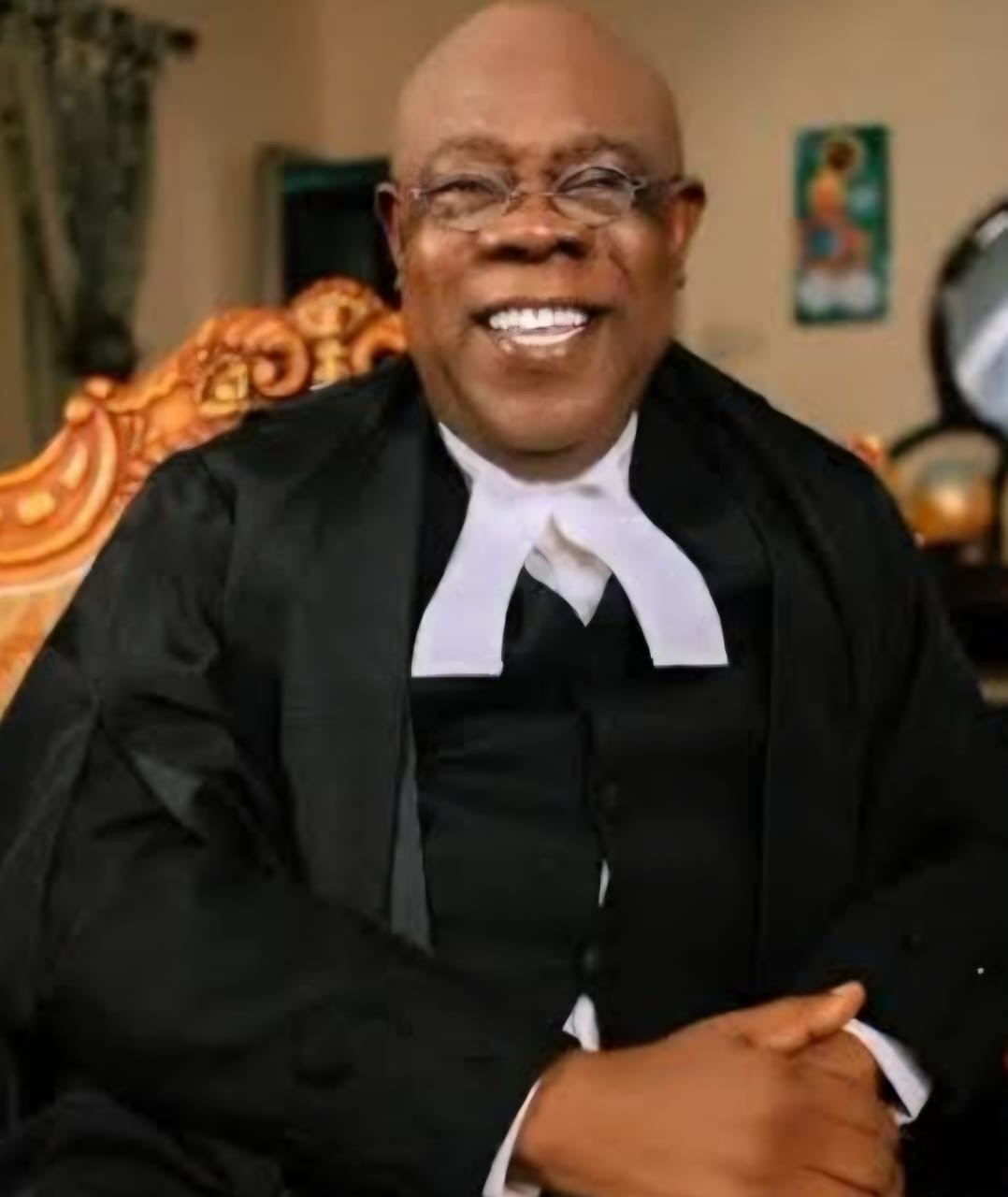
In this piece, Kunle Kalejaiye examines the constitutional tension between the autonomy of State Judicial Service Commissions and the National Judicial Council’s oversight powers, arguing that judicial seniority and established conventions must guide the appointment of substantive State Chief Judges
Federalism, as a political concept, distributes sovereignty between a central authority and constituent state units. Thus, ensuring that federating states are not mere administrative extensions. However, friction frequently arises when federal oversight intersects with state machinery.

One of such areas of friction is the exercise of the oversight functions of the National Judicial Council (NJC) over the State Judicial Service Commission (JSC) in the appointment of a substantive Chief Judge of a State.
The National Judicial Council (NJC) functions as the definitive custos morum (guardian of good morals) of the Nigerian judiciary, wielding its constitutional powers under Section 153(1) and the Third Schedule to shield the bench from political manipulation and enforce judicial conventions.
As stated in its Profile published on its website: “insulate the Judiciary from the whims and caprices of the Executive; hence guarantee the independence of this Arm of Government, which is a sine qua non for any democratic Government, the National Judicial Council was created and vested with enormous powers and functions of the erstwhile Advisory Judicial Committee (AJC) which it replaced.”
In the context of the Imo State judicial impasse, the Council acts as the institutional custodian of the sacred seniority rule. A rule structurally reinforced by Section 271(4), by fiercely resisting executive attempts to bypass the most senior judge when appointing the substantive Chief Judge.
The crisis followed the retirement of Justice T. E. Chukwuemeka Chikeka. State authorities initially bypassed seniority to appoint Justice Theophilus Nzeukwu, ranked fourth, as Acting Chief Judge.
Armed with the exclusive authority to recommend judicial appointments and discipline errant officers, the NJC effectively checks executive overreach and prevents the politicisation of the state’s judicial leadership.
Though the NJC rejected Nzeukwu’s appointment under Section 271(4) of the Constitution, friction intensified. While the state’s most senior judge, Hon. Justice Ijeoma Agugua, was eventually sworn in as Acting Chief Judge, her deliberate omission from the substantive shortlist compiled by the State Judicial Service Commission (JSC) signaled a persistent executive effort to influence succession, bringing this constitutional tension to a head.
This impasse crystallises a clash of explicit constitutional interpretations regarding where political overreach meets the Council’s insistence on ethical rectitude.
Under Section 271 of the 1999 Constitution (as amended), substantive appointments are made by the Governor on the NJC’s recommendation, from lists advised by the State JSC under the Third Schedule. However, Section 202 mandates that the State JSC shall not be subject to ”external direction or control”.
Citing Section 202 and Attorney-General of the Federation v. Attorney-General of Abia State (2024), Imo State Attorney-General Hon. Paul Obinatu argues the State JSC enjoys absolute shortlisting autonomy. In the state’s view, the NJC can approve or reject final recommendations, but it cannot actively dictate the names that go into the initial nomination pool.
The learned Attorney-General’s argument overlooks how these competing provisions have been judicially harmonised in the past.
In Hon. Justice Raliat Elelu-Habeeb & Anor v. The Attorney General of the Federation & Ors (2012), the Supreme Court harmonised these sections via the doctrine of sequential interdependence. The apex court ruled that Sections 202 and 271 form a mandatory sequence. Thus the State JSC’s autonomy is spent once its list is transmitted. Section 202 cannot shield attempts to bypass hierarchy or give a veiled impression of political favoritism or predetermination.
Precedents in Federal Republic of Nigeria v. Hon. Justice Hyeladzira Ajiya Nganjiwa (2022) and Kayode Bamisile v. National Judicial Council & Ors (2012) reaffirm that the NJC holds ultimate and unshared gatekeeping authority to insulate the bench from state-level political manipulation.
Legal history reveals that such standoffs are not peculiar to Imo State. Contrived deadlocks in Cross River State (regarding Justice Akon Ikpeme), Abia, Kebbi, and Gombe were resolved when the NJC firmly withheld its approval to recommend junior candidates. It froze appointments of substantive Chief Judges until state executives saw the wisdom of its stance and capitulated.
Ultimately, this rigorous administrative oversight transforms unwritten traditions of independence into binding realities, preserving the integrity of the courts and anchoring public trust in the justice system.
“The office of Chief Judge is a public trust, and its occupants must emerge through a process that commands confidence in the independence, integrity and fairness of the judiciary.” (Okutepa, SAN)
Bypassing senior jurists without clear, cold and verifiable documented disqualifying factors transforms independent courts into political appendages with its attendant dangers of favouritism and patronage. The dangers explicitly warned against in National Judicial Council & Ors v. Hon. Mr. Justice C.P.N. Senlong & Ors (2010).
“…powers exercisable by the Appellants (NJC) are not to be scuttled or frustrated by any one in whatever position or authority” (Mary Peter-Odili, JCA as she then was).
Resolving this gridlock therefore, requires the Imo State JSC to recognize that true judicial independence demands strict adherence to both the text of the Constitution and deep-seated judicial conventions.
● Asiwaju Kunle Kalejaye SAN is of Eagle102.5 FM Ilese-Ijebu.




Imo Chief Judge: Why NJC’s oversight powers matter, by Kunle Kalejaye

2027 Polls: HURIWA warns 375 election judges against selling justice

CJN swears in 2027 election petition tribunal members

Imo AG faults NJC directive on Chief Judge shortlist

Counterfeit products: A deadly trade claiming Nigerian lives, by Kazeem Akintunde

Tinubu’s ‘ex-lecturer’ raises fresh questions over Chicago varsity education

ADC will contest 2027, but Atiku may be excluded – Keyamo

The labour congress/trade union squabble, by Monday Ekpe, PhD

ADC Judgment: In defence of Lifu’s ruling, Federal High Court leadership, by Kayode Ajulo, SAN

Problems with that ‘Middle Belt’ parley with Tinubu, by Danlami Nagari Sani

Sanction of Judges: NJC on quiet revolution to cleanse judiciary—Prof Akinseye-George, SAN
5,000 academics to endorse Tinubu’s re-election bid in November
BREAKING: NJC recommends 28 for judicial appointments, suspends three judges
Tinubu appoints ex-DSS DG Yusuf Bichi NISS Governing Board Chairman

Presidency seeks private sector funding for state Police

Agbakoba, Ojo, Etomi, three others to receive Gavel Lifetime Achievement Awards

Media Trust Group to launch AI-powered converged digital Newsroom

Opene v NJC: That S’Court landmark ruling on NJC’s disciplinary powers over judges, by Ebun-Olu Adegboruwa,SAN

Does Nigeria truly have over 103 million voters, asks Prof Chidi Anselm Odinkalu

Ex-DSS officer apologises to DG over leaked memo, threatens lawsuit against SaharaReporters
-
 FeaturedMay 2 2025
Sanction of Judges: NJC on quiet revolution to cleanse judiciary—Prof Akinseye-George, SAN
-
 FeaturedNovember 3 2026
5,000 academics to endorse Tinubu’s re-election bid in November
-
 FeaturedNovember 4 2026
BREAKING: NJC recommends 28 for judicial appointments, suspends three judges
-
General NewsOctober 23 2026
Tinubu appoints ex-DSS DG Yusuf Bichi NISS Governing Board Chairman
-
 NewsOctober 28 2026
Presidency seeks private sector funding for state Police
-
 Bar and BenchOctober 23 2026
Agbakoba, Ojo, Etomi, three others to receive Gavel Lifetime Achievement Awards
-
 NewsOctober 18 2026
Media Trust Group to launch AI-powered converged digital Newsroom
-
 FeaturedOctober 27 2026
Opene v NJC: That S’Court landmark ruling on NJC’s disciplinary powers over judges, by Ebun-Olu Adegboruwa,SAN