 11
11


The All Progressives Congress Presidential Campaign Council has criticised former Labour Party presidential candidate, Peter Obi, over his assertion that he won the 2023 presidential election despite admitting that he had no evidence to substantiate the claim.
Obi reportedly made the remark during a recent interview with the BBC, where he said he preferred not to dwell on the past but maintained that he won the last presidential election.
“I don’t like going back to the past. I won the last election. There’s no evidence, but I won the election. Everything is not based on evidence,” he was quoted as saying.
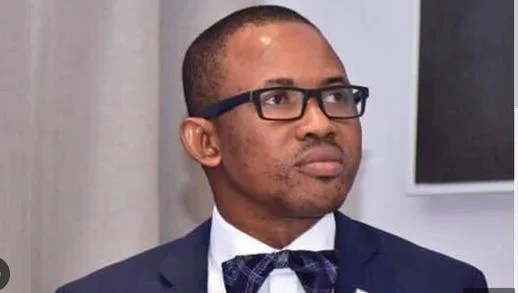
Reacting in a statement on Thursday, the spokesman for the APC Presidential Campaign Council, Dele Alake, described Obi’s position as delusional, arguing that the former Anambra State governor had failed to provide credible evidence to support his claim.
Alake said Obi’s assertion, particularly his admission that he had no evidence, raised questions about his credibility and the basis for his continued insistence that he won the election.
“Nothing is more annoying than Obi’s recent claim that he won the 2023 presidential election, while simultaneously admitting he lacks the evidence to support it,” Alake said.
He further faulted Obi’s suggestion that political claims could be made without evidence, describing such reasoning as troubling. According to him, Obi’s insistence that he won the election, despite the officially declared results, showed a disconnect from the established facts.
Alake also questioned the source of Obi’s conviction, making sarcastic references to individuals associated with the former presidential candidate and his supporters, popularly known as the Obidients.
The APC spokesman maintained that President Bola Tinubu won the February 25, 2023 presidential election, pointing to the results announced by the Independent National Electoral Commission (INEC) and the subsequent decisions of the Presidential Election Petition Court and the Supreme Court, which upheld Tinubu’s victory.
Tinubu was declared the winner with 8,794,726 votes, ahead of Atiku Abubakar of the Peoples Democratic Party, who polled 6,984,520 votes, and Obi, who came third with 6,101,533 votes.
Alake also defended Tinubu’s administration, arguing that the President had continued to exercise his mandate through economic reforms, infrastructure development and policies intended to expand opportunities for Nigerians.
The APC spokesman subsequently challenged Obi to honour an earlier pledge to withdraw from the 2027 presidential race if it was established that his administration as governor of Anambra State had left behind financial liabilities. Alake claimed that the state’s financial records had established the existence of such liabilities.
The exchange comes as political actors increasingly position themselves ahead of the 2027 general elections, with the 2023 presidential contest and its disputed political legacy continuing to shape public debate.
The 2023 presidential election was one of Nigeria’s most closely watched political contests, with Tinubu emerging as the winner in a race that also featured Atiku and Obi as leading opposition candidates.
Obi and other opposition figures challenged aspects of the electoral process, raising concerns about the conduct of the election and the collation and transmission of results.
However, the Presidential Election Petition Court dismissed the petitions challenging Tinubu’s victory, and the Supreme Court subsequently upheld the outcome.
While the judicial decisions settled the legal challenges to the declared result, political disagreements over the election have continued, with Obi retaining a significant support base and remaining a prominent opposition figure.
The latest exchange underscores the continuing political rivalry between the APC and Obi as attention shifts towards the 2027 presidential election.