Business
Personal borrowing hits record N1.99trn as Nigerians struggle with rising costs

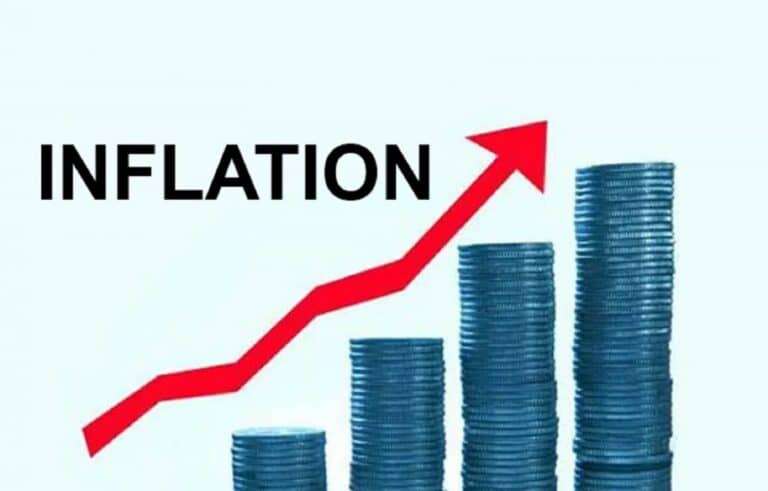
Personal loans owed by Nigerians to financial institutions rose to a record N1.99trn in June 2026, as mounting household expenses, persistent inflation and high lending rates increasingly push consumers towards borrowing to meet their financial obligations.
The outstanding balance increased by N58.5bn, representing 3.03 per cent growth in three months, from approximately N1.93trn recorded at the end of March, according to the Central Bank of Nigeria’s (CBN) Second Quarter 2026 Economic Report.

The development coincides with growing financial pressures on households following a series of economic reforms introduced by President Bola Tinubu’s administration, including the removal of petrol subsidy, exchange-rate liberalisation and monetary policy tightening.
Although the government has defended the reforms as necessary to stabilise the economy, improve public revenue, attract investment and strengthen foreign exchange availability, their immediate effects have included higher transportation and energy costs, increased prices of goods and services and a significant squeeze on household purchasing power.
The World Bank has acknowledged improvements in Nigeria’s macroeconomic stability following the reforms but warned that the gains have yet to translate into substantial improvements in the living conditions of many citizens.
With incomes struggling to keep pace with expenditure, more households face difficult choices in meeting essential obligations, including food, housing, healthcare, transportation and children’s education. The increasing resort to borrowing for everyday needs is emerging as one indication of the financial strain.
The CBN report showed that total consumer credit rose by 3.26 per cent to N3.17trn in the second quarter, from N3.07trn in the preceding quarter, representing an additional N100bn in household borrowing within three months.
The increase reflected growth in both personal and retail loans.
“Consumer credit outstanding increased by 3.26 per cent to N3.17trn, from N3.07trn in the preceding quarter. The increase reflected growth in both retail and personal loans, which rose by 4.10 per cent and 3.03 per cent, respectively,” the report stated.
Personal loans accounted for 62.87 per cent of total consumer credit, while retail loans represented 37.13 per cent, indicating that nearly N63 out of every N100 owed by consumers to financial institutions was classified as personal borrowing.
Retail loans also increased by approximately N46.5bn to N1.18trn at the end of June, compared with an estimated N1.13trn in March.
Although retail loans recorded a faster quarterly growth rate, personal borrowing remained the dominant component of consumer credit.
The rising debt burden coincided with renewed inflationary pressures, with headline inflation increasing to 15.91 per cent in June 2026 from 15.38 per cent in March.
The CBN attributed the inflationary pressures largely to higher energy and commodity prices linked to geopolitical tensions in the Middle East, which increased production and transportation costs.
The development further strained household budgets, particularly among Nigerians whose earnings had not kept pace with rising prices.
However, the CBN report did not establish whether the increase in personal loans was driven primarily by financial distress, consumption needs or improved access to credit.
Borrowing costs also remained elevated during the period.
The CBN said the average prime lending rate declined marginally to 19.01 per cent in the second quarter from 19.37 per cent in the preceding quarter.
In contrast, the maximum lending rate increased slightly to 34.37 per cent from 34.34 per cent, indicating that credit remained expensive for some categories of borrowers.
Although the rates reflect general banking sector lending conditions rather than specific personal loan charges, they underscore the high cost of borrowing in the economy.
Beyond the CBN figures, findings from the 2026 Access to Financial Services in Nigeria Survey by Enhancing Financial Inclusion and Advancement (EFInA) provide further evidence of the changing pattern of borrowing among Nigerians.
The survey found that 40.8 per cent of formal borrowers used loans mainly for coping and consumption purposes in 2026, compared with 31.7 per cent in 2023.
The 9.1 percentage-point increase made consumption and coping the largest purpose of formal borrowing, overtaking loans for productive enterprise activities, which declined from 40.2 per cent to 34.3 per cent over the same period.
Borrowing for household assets also fell from 25.2 per cent to 23.4 per cent.
The survey warned that the changing pattern of credit utilisation could undermine the role of borrowing in building productive capacity.
“Coping/consumption purposes rose from 31.7 per cent to 40.8 per cent; productive purpose fell from 40.2 per cent to 34.3 per cent. We need to ensure that credit builds productive capacity and does not produce distress,” it stated.
The findings suggest that an increasing proportion of Nigerians are turning to formal loans to manage immediate financial needs rather than invest in businesses and other income-generating activities.
The survey further showed that formal credit use increased from six per cent of adults in 2023 to 10 per cent in 2026, representing approximately 11.9 million Nigerians borrowing from regulated financial providers.
When informal sources were included, 36 per cent of adults had access to some form of credit.
Credit use among informally employed Nigerians tripled from five per cent to 15 per cent, while borrowing among people aged 18 to 35 increased from four per cent to 10 per cent.
Business owners also recorded an increase in credit use from four per cent to 10 per cent, while borrowing among farmers rose from two per cent to six per cent.
While the expansion of access to credit represents progress in financial inclusion, the growing reliance on loans for consumption raises concerns about household debt sustainability, particularly where borrowers have limited income security and repayment capacity.
The trend also highlights the risk of households becoming increasingly dependent on credit to bridge the gap between earnings and expenditure, potentially leaving them with additional financial obligations in subsequent months.
The figures suggest that the challenge facing Nigeria’s financial system is no longer simply how to expand access to credit, but how to ensure that borrowing supports productive activities, strengthens household resilience and does not deepen financial vulnerability.




It’s South’s turn, Kwankwaso tells Atiku, urges support for Obi

Personal borrowing hits record N1.99trn as Nigerians struggle with rising costs

Beyond Pilgrimage: The politics of Tinubu’s Saudi trip, by Lasisi Olagunju

Gunmen abduct PLASU female student, shoot victim in fresh attack

Between Kidnap and Attack: Questions Sowore must answer, by Lemmy Ughegbe, Ph.D

As opposition parties gather momentum, by Dr Monday Ekpe

After years of rivalry, Adeleke, Oyetola camps unite for Tinubu

Fresh Ebola concerns as Nigeria identifies two suspected cases

US court rejects bid to question Tinubu over alleged cyberattacks

Election season: Odinkalu raises alarm over alleged ‘politically compromised judges’

Presidency seeks private sector funding for state Police

Tinubu appoints ex-DSS DG Yusuf Bichi NISS Governing Board Chairman

Agbakoba, Ojo, Etomi, three others to receive Gavel Lifetime Achievement Awards
Sanction of Judges: NJC on quiet revolution to cleanse judiciary—Prof Akinseye-George, SAN

Media Trust Group to launch AI-powered converged digital Newsroom
Does Nigeria truly have over 103 million voters, asks Prof Chidi Anselm Odinkalu

Ex-DSS officer apologises to DG over leaked memo, threatens lawsuit against SaharaReporters

Rivers lawyers give VeryDarkMan seven days to apologise over alleged defamation

Opene v NJC: That S’Court landmark ruling on NJC’s disciplinary powers over judges, by Ebun-Olu Adegboruwa,SAN

The Fake Professor: Nigeria’s obsession with titles, by Hope O’Rukevbe EGHAGHA
-
 NewsOctober 28 2026
Presidency seeks private sector funding for state Police
-
 General NewsOctober 23 2026
Tinubu appoints ex-DSS DG Yusuf Bichi NISS Governing Board Chairman
-
 Bar and BenchOctober 23 2026
Agbakoba, Ojo, Etomi, three others to receive Gavel Lifetime Achievement Awards
-
Bar and BenchMay 2 2025
Sanction of Judges: NJC on quiet revolution to cleanse judiciary—Prof Akinseye-George, SAN
-
 NewsOctober 18 2026
Media Trust Group to launch AI-powered converged digital Newsroom
-
 CommentaryOctober 25 2026
Does Nigeria truly have over 103 million voters, asks Prof Chidi Anselm Odinkalu
-
 General NewsOctober 21 2026
Ex-DSS officer apologises to DG over leaked memo, threatens lawsuit against SaharaReporters
-
 NewsOctober 25 2026
Rivers lawyers give VeryDarkMan seven days to apologise over alleged defamation