Featured
Obasanjo: Debt worse than leprosy, destroys generations

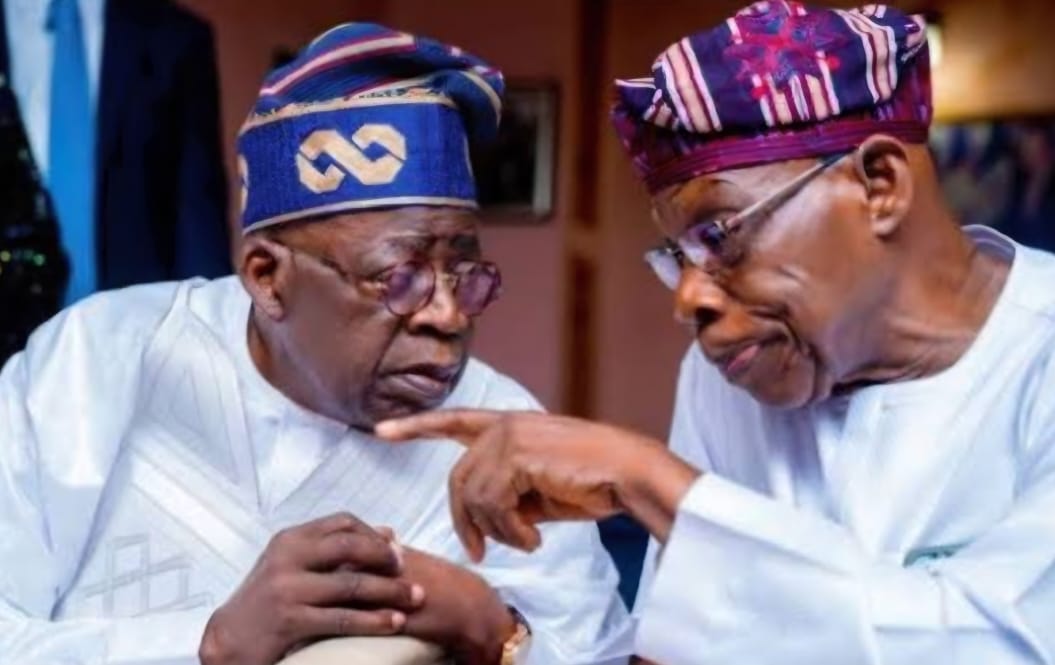
Former President Olusegun Obasanjo has strongly criticised President Bola Tinubu’s defence of government borrowing, declaring that debt is worse than leprosy because its consequences could burden generations yet unborn.
Obasanjo described as “absolute nonsense” the President’s assertion that borrowing was not inherently harmful, insisting that excessive debt could undermine the country’s future.

He spoke on Friday at the Ajibosin Platform, a public forum held in Abeokuta, Ogun State, with the theme, “Leveraging Artificial Intelligence to Solve Grassroots Problems and Accelerate National Development”.
Reacting to Tinubu’s earlier comparison of borrowing with leprosy, the former President said the consequences of debt extended beyond individuals to affect entire generations.
“And for anybody to say debt is no leprosy, is absolute nonsense. Debt is worse than leprosy. Because leprosy destroys only one person. Debt destroys generations,” he said.
Obasanjo also expressed concern over the depreciation of the naira, recalling that when he established his farm 47 years ago, the exchange rate was N1 to $1.85.
“When I started my farm, 47 years ago, naira to dollar was one naira to $1.85.
“Forty-seven years ago. What has Nigeria done in 47 years that we now have 1,500 naira to dollar? What have we done?” he asked.
He also questioned the knowledge and capacity of Nigeria’s political leaders to address the country’s challenges and improve citizens’ welfare.
“What do our leaders know? And what do they not know? And from what they know, what can they do for us?” he asked.
The former President further criticised Nigeria’s reliance on the World Bank and the International Monetary Fund (IMF), arguing that the institutions were established before Nigeria’s independence and that their economic prescriptions might not adequately reflect the country’s peculiar circumstances.
“World Bank and IMF were not designed for us. They were not built by us. They were built before we became independent. And that’s the people who would determine what we do,” he said.
Bar & Bench Watch reports that Obasanjo’s remarks came against the backdrop of renewed public debate over the Federal Government’s borrowing policy, following Tinubu’s request to the National Assembly for approval of fresh external loans totalling $20.52 billion and €1.045 billion under the 2026–2027 Supplementary External Borrowing Plan.
The proposed facilities are intended to finance projects and programmes in infrastructure, agriculture, healthcare, education, water supply, security, employment generation and financial management reforms.
In his request to the National Assembly, the President said the additional financing was necessary to bridge funding gaps arising from the country’s substantial infrastructure needs and support his administration’s economic development agenda.
The request was conveyed in separate communications to the Senate and the House of Representatives and referred to the relevant legislative committees for consideration.
The latest borrowing proposal has revived scrutiny of Tinubu’s position on government loans, which he had defended in April during a meeting with Plateau State leaders at the State House.
At the meeting, the President insisted that borrowing should not be regarded as inherently harmful, provided the government worked towards repayment.
“If we have to borrow, we borrow. Borrowing is not leprosy, we just have to work hard to be able to pay for it,” Tinubu had said.
However, in a statement issued on Friday, titled “From Reforms to Delivery: Our Infrastructure Investment and Growth Strategy”, the President offered a more detailed explanation of his administration’s borrowing policy.
He argued that the critical consideration should not simply be the volume of loans obtained but the economic value of the projects they finance.
“The key question is not how much we borrow, but what we build, the value we create and the future we leave behind,” Tinubu said.
He explained that his administration was shifting from borrowing to meet short-term fiscal pressures to obtaining long-term financing for productive investments capable of generating economic growth, revenue and employment.
The President listed the Lagos-Calabar Coastal Highway, Sokoto-Badagry Superhighway, Trans-Sahara Superhighway, electricity grid improvements and upgrades to major commercial ports in Lagos among the projects expected to benefit from the investments.
He also said the projects, alongside investments in healthcare, education and vocational training, would connect economic regions, reduce transportation costs, stimulate industrial activities and attract private investment.
Tinubu maintained that infrastructure financed through borrowing would generate economic value for decades and create opportunities for future generations.
He disclosed that Nigeria’s public debt stood at 35.75 per cent of Gross Domestic Product in the second quarter of 2026, while debt servicing accounted for about 65 per cent of government revenue in the first half of the year, figures he said underscored the need for fiscal discipline and productive investment.
The President also defended the administration’s economic reforms, saying they had improved government revenue, strengthened external reserves and reduced the country’s cost of borrowing.
The disagreement between the two former and current leaders has brought renewed attention to the sustainability of Nigeria’s debt profile, the productivity of government borrowing and the need to ensure that loans translate into measurable benefits for citizens.



Fintiri hails NIPR’s inclusive approach to national reputation management

2027: INEC has no preferred candidate, party, Amupitan assures ECOWAS

Obasanjo: Debt worse than leprosy, destroys generations

Imo NYSC kidnap: Bus driver, witness identify five suspects in court

2027: Media must shun unofficial election results, Arogundade warns

INEC blames registration officers for AI-generated photos, other irregularities in voter register

N15.5m fraud: Witness alleges ex-CCT boss directed N6m payment to wife, N4m for children’s fees

Expedited terrorism trials offer model for criminal justice reform, by Prof Akinseye-George, SAN

N30.8bn fraud: ICPC re-arraigns self-styled DG Adeyemi for forgery

LPPC opens 2027 SAN application portal, pegs fees at N5m, N2.5m

Presidency seeks private sector funding for state Police

Tinubu appoints ex-DSS DG Yusuf Bichi NISS Governing Board Chairman

Agbakoba, Ojo, Etomi, three others to receive Gavel Lifetime Achievement Awards

Media Trust Group to launch AI-powered converged digital Newsroom
Sanction of Judges: NJC on quiet revolution to cleanse judiciary—Prof Akinseye-George, SAN

Ex-DSS officer apologises to DG over leaked memo, threatens lawsuit against SaharaReporters

Does Nigeria truly have over 103 million voters, asks Prof Chidi Anselm Odinkalu

Rivers lawyers give VeryDarkMan seven days to apologise over alleged defamation
N2bn Fraud: How Eteta Ita looted FIRS’ funds to service her private school ― Witness

Opene v NJC: That S’Court landmark ruling on NJC’s disciplinary powers over judges, by Ebun-Olu Adegboruwa,SAN
-
 NewsOctober 28 2026
Presidency seeks private sector funding for state Police
-
 General NewsOctober 23 2026
Tinubu appoints ex-DSS DG Yusuf Bichi NISS Governing Board Chairman
-
 Bar and BenchOctober 23 2026
Agbakoba, Ojo, Etomi, three others to receive Gavel Lifetime Achievement Awards
-
 NewsOctober 18 2026
Media Trust Group to launch AI-powered converged digital Newsroom
-
Bar and BenchMay 2 2025
Sanction of Judges: NJC on quiet revolution to cleanse judiciary—Prof Akinseye-George, SAN
-
 General NewsOctober 21 2026
Ex-DSS officer apologises to DG over leaked memo, threatens lawsuit against SaharaReporters
-
 CommentaryOctober 25 2026
Does Nigeria truly have over 103 million voters, asks Prof Chidi Anselm Odinkalu
-
 NewsOctober 25 2026
Rivers lawyers give VeryDarkMan seven days to apologise over alleged defamation