Commentary
Expedited terrorism trials offer model for criminal justice reform, by Prof Akinseye-George, SAN

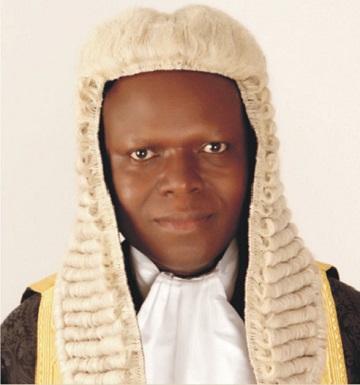
In this piece, Professor Yemi Akinseye-George, SAN, examines Nigeria’s expedited terrorism trials, commending judicial leadership and inter-agency collaboration while highlighting procedural shortcomings and urging institutional reforms to sustain speedy trials without compromising constitutional guarantees of fair hearing.
Having, along with colleagues observed several proceedings of the Federal High Court during the recent terrorism trials held from 19 to 24 October 2026, in my capacity as a representative of civil society and consultant to the National Center for State Courts (NCSC), I consider it important to comment briefly on the proceedings.

Firstly, I acknowledge the remarkable institutional efforts that facilitated the adjudication of hundreds of terrorism cases within a matter of days. This significant undertaking demonstrates the value of effective institutional collaboration among the Office of the Attorney-General of the Federation and Minister of Justice, the Department of Public Prosecutions of the Federation (DPPF), the Department of State Services (DSS), the Legal Aid Council of Nigeria, the Nigerian Correctional Service and the Federal High Court. Their coordinated efforts illustrate how expeditious criminal adjudication can be pursued without compromising the constitutional guarantees of fair hearing and legal representation.
From the proceedings we observed, individual defendants were afforded opportunities to be heard in open court, with due regard to applicable statutory and constitutional safeguards.
Against this background, I consider the description of these proceedings as “mass trials” potentially misleading, particularly where it suggests that defendants were tried collectively or denied individual consideration.
A more accurate characterisation would be “expedited individual trials conducted through coordinated judicial and inter-agency efforts.”
Besides, being a court of summary jurisdiction, the Federal High Court is empowered by law to conduct and conclude criminal cases expeditiously in appropriate cases.
Expeditious justice and fair hearing are not mutually exclusive
The inter-agency coordination framework, bringing together executive institutions -correctional authorities, security agencies, the Armed Forces, investigators and prosecutors, alongside the judiciary, deserves to be sustained, strengthened and adequately resourced.
Such collaboration is essential to facilitating the timely disposition of outstanding terrorism cases, addressing prolonged pre-trial detention and progressively reducing the population of persons held in custodial facilities while awaiting trial.
More importantly, the operational experiences, procedural innovations, institutional arrangements and lessons learned from these proceedings should be systematically documented, evaluated and institutionalised. This would provide an invaluable foundation for strengthening criminal case management, improving the administration of justice, addressing avoidable delays and reducing the population of awaiting-trial persons, consistent with the objectives and provisions of the Administration of Criminal Justice Act (ACJA), 2015.
Indeed, this reform-oriented approach lies at the heart of the technical assistance and institutional capacity-building support provided by the United States Government through the National Center for State Courts (NCSC).
Special acknowledgement is also due to the investigators, judicial officers, court registrars, correctional personnel and other officials whose dedication, professionalism and considerable personal sacrifices contributed to the successful conduct of the proceedings.
Their collective efforts underscore the importance of sustained institutional investment, operational preparedness and coordinated justice-sector interventions in advancing the efficient, fair and credible criminal justice system envisioned by the ACJA 2015.
Particularly noteworthy was the personal involvement of senior justice-sector officials in the courtroom proceedings. The Attorney-General of the Federation and Minister of Justice, Prince Lateef Fagbemi, SAN, and the Director of Public Prosecutions of the Federation, Rotimi Oyedepo, SAN, personally led the prosecution in several cases. Similarly, the Director-General of the Legal Aid Council of Nigeria, Mr Aliyu Bagudu Abubakar, personally appeared to lead the defence team in some proceedings.
Beyond demonstrating institutional commitment at the highest levels, their direct participation provided an invaluable opportunity for professional mentorship, practical learning and capacity development for younger prosecutors from the Federal Ministry of Justice and defence counsel from the Legal Aid Council.
This dimension of the proceedings deserves recognition as an important contribution to the development of the next generation of criminal justice practitioners.
It is equally noteworthy that the defendants who appeared before the courts were generally well-groomed, appeared adequately nourished and conducted themselves in an orderly manner.
While such observations cannot, by themselves, establish the overall conditions of detention, they offer a positive impression of the defendants’ physical condition and presentation during the proceedings.
The participation of experienced judges of the Federal High Court, including the Honourable Justice Binta Murtala Nyako and other distinguished judicial officers, as well as Honourable Justices Emeka Nwite and James Omotosho, who had been elevated to the Court of Appeal but were yet to be sworn in at the time, reflects the importance attached to addressing the backlog of terrorism-related cases.
Other Judges who participated in the fast-track proceedings include J.O. Abdumalik, Emeka Nwite, C.S Onah, O.A Egwuatu, and M.O Olajuwon and others.
These deliberate and coordinated judicial efforts also speak to the leadership and administrative foresight of the Chief Judge of the Federal High Court, the Honourable Justice John Tsoho, in mobilising judicial resources and institutional capacity to address a complex challenge with far-reaching implications for the administration of justice, public confidence and national security.
Importantly, the exercise produced outcomes beyond the conclusion of trials.
In some courts, defendants were discharged and acquitted, with arrangements made for their rehabilitation.
In other cases, defendants who had been convicted and sentenced but had spent periods in detention exceeding their sentences were transferred to the Operation Safe Corridor rehabilitation and reintegration programme in Gombe.
The exercise was not without its challenges. A few procedural lapses were observed, including hurried drafting of charges, oral amendments to charges and instances where charges were filed on the day of trial.
There were also discrepancies between the contents of some charges and the corresponding confessional statements. In addition, proceedings in one court were briefly delayed because an interpreter was unavailable. Encouragingly, these lapses were promptly addressed.
From our observations, witnesses other than the investigating police officers (IPOs) were not called and previously convicted persons were not re-arraigned during the exercise.
These observations reinforce the importance of documenting the experiences and lessons from the exercise to improve future criminal case management and minimise avoidable procedural errors.
The significance of this initiative extends beyond the number of cases concluded or the speed with which proceedings were conducted. Its enduring value lies in demonstrating that, with purposeful leadership, adequate preparation, effective coordination and respect for constitutional safeguards, the criminal justice system can respond more efficiently to complex and high-volume caseloads without sacrificing the fundamental principles upon which the rule of law rests.
It is therefore imperative that the gains recorded through these proceedings are not treated as an isolated achievement. Rather, they should serve as a catalyst for broader and sustainable reforms in criminal case management, prosecutorial coordination, legal aid delivery, custodial administration and judicial caseflow management across the country.
Ultimately, if sustained and institutionalised, this combination of proactive executive leadership, responsive judicial administration, effective inter-agency collaboration and targeted international technical support could become a transformative model for addressing longstanding inefficiencies in Nigeria’s criminal justice system.
The overarching lesson is clear: expeditious justice and fair hearing are not mutually exclusive. With sound leadership, institutional cooperation, improved resources and unwavering respect for due process, both can—and must—be achieved.
This is the promise of the Administration of Criminal Justice Act (ACJA), 2015, and it is a vision of justice-sector reform that deserves sustained national commitment.




When private marital matters become public spectacles, by Hassan Gimba

Inside Nigeria’s Kidnap Economy: How terrorists, bandits, informants launder billions in ransom

‘Coconut Judge’: Odinkalu accuses NBA of selective enforcement of professional ethics, by Chidi Anselm Odinkalu
For Festus Keyamo: Heavens may not fall but the sky can recede, by Prof Chidi Anselm Odinkalu

INEC’s trust deficit deepens as London protesters confront Amupitan over 2027 voter register

FG secures 2,512 terrorism convictions after 11 trial phases, raises questions over years of delayed prosecutions

SAN Rank: NLS renews demand for publication of candidates’ scores, sparks transparency debate

Ibori loses £136m asset forfeiture appeal in UK, reignites questions over 2009 Nigerian acquittal

Nigerian-trained Dapo Akande elected to World Court, joins distinguished league of Nigerian legal giants

2027: Why I backed Tinubu in 2023 but now want to unseat him – Makinde

Sanction of Judges: NJC on quiet revolution to cleanse judiciary—Prof Akinseye-George, SAN

BREAKING: NJC recommends 28 for judicial appointments, suspends three judges

Tinubu appoints ex-DSS DG Yusuf Bichi NISS Governing Board Chairman
5,000 academics to endorse Tinubu’s re-election bid in November

Presidency seeks private sector funding for state Police

Agbakoba, Ojo, Etomi, three others to receive Gavel Lifetime Achievement Awards

Media Trust Group to launch AI-powered converged digital Newsroom

Opene v NJC: That S’Court landmark ruling on NJC’s disciplinary powers over judges, by Ebun-Olu Adegboruwa,SAN
APC expels Rauf Aregbesola

Tinubu seeks Senate approval for fresh N10.79trn foreign loan amid debt controversy
-
 FeaturedMay 2 2025
Sanction of Judges: NJC on quiet revolution to cleanse judiciary—Prof Akinseye-George, SAN
-
 FeaturedNovember 4 2026
BREAKING: NJC recommends 28 for judicial appointments, suspends three judges
-
 General NewsOctober 23 2026
Tinubu appoints ex-DSS DG Yusuf Bichi NISS Governing Board Chairman
-
FeaturedNovember 3 2026
5,000 academics to endorse Tinubu’s re-election bid in November
-
 NewsOctober 28 2026
Presidency seeks private sector funding for state Police
-
 Bar and BenchOctober 23 2026
Agbakoba, Ojo, Etomi, three others to receive Gavel Lifetime Achievement Awards
-
 NewsOctober 18 2026
Media Trust Group to launch AI-powered converged digital Newsroom
-
 FeaturedOctober 27 2026
Opene v NJC: That S’Court landmark ruling on NJC’s disciplinary powers over judges, by Ebun-Olu Adegboruwa,SAN