News
2027: Media must shun unofficial election results, Arogundade warns

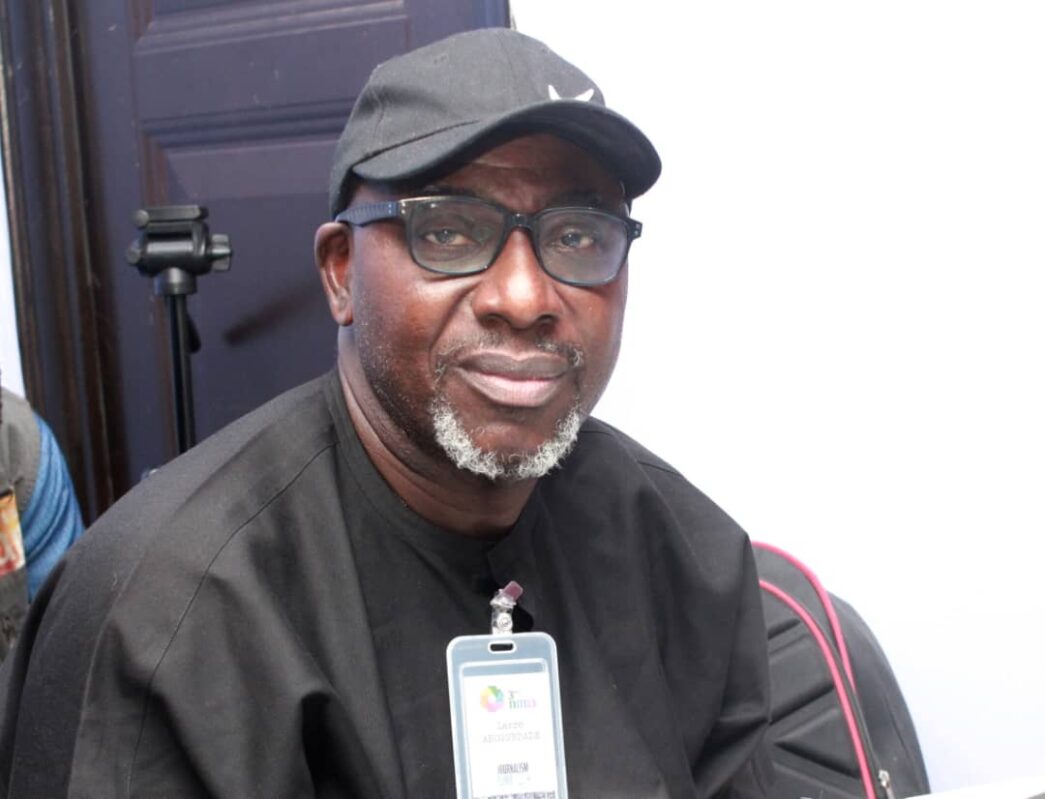
The Executive Director of the International Press Centre (IPC), Dr Lanre Arogundade, has warned media organisations against publishing unverified election results or declaring winners ahead of the Independent National Electoral Commission’s (INEC) official announcements during the 2027 general elections.
He cautioned that partisan reporting and premature declaration of winners could inflame political tensions, trigger electoral violence and undermine national stability.

Arogundade gave the warning at a dialogue with media executives on compliance with the National Peace Accord, organised in Abuja by The Kukah Centre in collaboration with the IPC and the Centre for Media and Society (CEMESO), with funding from the European Union.
He recalled the 2007 post-election violence in Kenya, where partisan media coverage and competing claims of electoral victory contributed to tensions that eventually resulted in widespread bloodshed.
According to him, media organisations must avoid becoming instruments of political interests by reporting claims of victory from political parties or candidates before INEC formally announces the results.
He acknowledged that civil society organisations could deploy technology to monitor voting patterns and analyse election data but urged media houses to exercise caution in reporting projections and claims by political camps.
Arogundade also called for stronger fact-checking mechanisms, conflict-sensitive reporting and accountability in election coverage.
He urged media executives to hold political parties accountable for their obligations under the Electoral Act and the Nigerian Media Code of Election Coverage.
Identifying misinformation, particularly false information generated with Artificial Intelligence, as a major challenge ahead of the 2027 polls, he urged media organisations to independently document electoral violations rather than rely exclusively on reports by civil society organisations.
He further encouraged newsrooms to use editorials, opinion articles, interviews and public discussions to promote issue-based campaigns and draw attention to matters affecting Nigerians.
Arogundade also called on the National Peace Committee, through The Kukah Centre, to speak out whenever journalists were harassed or assaulted while performing their professional duties.
Bar & Bench Watch reports that the warning comes amid a growing debate over whether media organisations and members of the public can publish or analyse election results before INEC formally declares winners.
The controversy followed a caution by INEC Chairman, Prof. Joash Amupitan, on October 6, 2026, urging media organisations to resist publishing privately collated election results.
He maintained that the Electoral Act vested the authority to declare election results in the commission and advised journalists to establish fact-checking desks and use digital forensic tools to verify information before publication.
However, former President of the Nigerian Bar Association, Dr Olisa Agbakoba, SAN, subsequently challenged what he considered an overly broad interpretation of INEC’s authority.
In a letter dated October 12, 2026, to the INEC chairman, Agbakoba argued that the commission’s exclusive responsibility for formally declaring election results should not prevent citizens and journalists from reporting figures already announced at polling units or publishing information contained in authentic electoral documents, including Forms EC8A to EC8E.
Citing Section 39(1) of the 1999 Constitution, which guarantees freedom of expression and the right to receive and impart information, he maintained that accurately reporting results from authentic polling-unit records did not amount to usurping INEC’s statutory responsibility.
He also cited a 1984 Lagos State High Court judgment in a case involving the Nigerian Union of Journalists and the then Federal Electoral Commission, arguing that the ruling affirmed the media’s right to publish results already announced at polling centres.
Agbakoba subsequently clarified that media organisations could project election winners using verifiable results uploaded to INEC’s Result Viewing Portal (IReV), provided the figures were properly sourced and attributed.
The disagreement has brought into focus the distinction between the formal declaration of election results, which is governed by electoral law, and the publication, analysis and projection of figures already made public through authentic electoral records.
While INEC has emphasised the need to prevent misinformation and conflicting announcements, Agbakoba has argued that public access to and scrutiny of electoral records are essential to transparency and accountability.
Earlier, the Executive Director of The Kukah Centre, Rev. Fr. Atta Barkindo, said the National Peace Committee lacked constitutional powers to enforce compliance with the Peace Accord, relying instead on moral persuasion, dialogue and mediation to encourage political actors to honour their commitments.
He acknowledged that the committee had repeatedly faced criticism over its perceived inability to sanction violators, despite lacking the legal authority to do so.
Barkindo explained that the committee shared information and documented violations of electoral laws with INEC and the police, which have the statutory responsibility to investigate and act on such matters.
He described compliance with electoral laws as one of Nigeria’s major challenges, insisting that responsibility for peaceful elections should not be left to the National Peace Committee alone.
He recalled that the committee was established ahead of the 2015 general elections in response to concerns over personality-based campaigns, ethnic and religious divisions and inflammatory political statements.
According to him, the initiative was subsequently sustained following the intervention of former President Muhammadu Buhari.
Barkindo said the committee introduced two separate peace accords in 2019: one committing political parties and candidates to issue-based campaigns and another requiring them to accept electoral outcomes.
He urged media organisations to use their platforms to interrogate political candidates, demand explanations and redirect public discourse towards issues affecting Nigerians.
He also expressed concern that many voters lacked adequate access to information and the critical engagement needed to hold political leaders accountable.
In his opening remarks, the Senior Programme Manager of The Kukah Centre, Mr Esrom Ajanya, said the dialogue was organised to strengthen collaboration between civil society organisations and media executives ahead of the 2027 elections.
Ajanya said the media played a critical role in shaping political narratives, particularly as political parties and candidates intensified campaigns to win public support.
He explained that the engagement was designed to promote responsible political communication and ensure that political activities reflected Nigerians’ expectations and complied with existing legal frameworks.
He urged media executives and civil society organisations to work together towards peaceful campaigns and credible electoral processes.



Imo NYSC kidnap: Bus driver, witness identify five suspects in court

2027: Media must shun unofficial election results, Arogundade warns

INEC blames registration officers for AI-generated photos, other irregularities in voter register

N15.5m fraud: Witness alleges ex-CCT boss directed N6m payment to wife, N4m for children’s fees

Expedited terrorism trials offer model for criminal justice reform, by Prof Akinseye-George, SAN

N30.8bn fraud: ICPC re-arraigns self-styled DG Adeyemi for forgery

LPPC opens 2027 SAN application portal, pegs fees at N5m, N2.5m
INEC clears Pantami, Gwarzo for 2027 polls, rejects Adebutu’s petition

FG pays ₦1.2trn power debt, targets 19,000MW transmission capacity

Court declares Okorocha APC candidate for Imo West, orders INEC to replace Uzodimma

Presidency seeks private sector funding for state Police

Tinubu appoints ex-DSS DG Yusuf Bichi NISS Governing Board Chairman

Agbakoba, Ojo, Etomi, three others to receive Gavel Lifetime Achievement Awards

Media Trust Group to launch AI-powered converged digital Newsroom

Ex-DSS officer apologises to DG over leaked memo, threatens lawsuit against SaharaReporters
Sanction of Judges: NJC on quiet revolution to cleanse judiciary—Prof Akinseye-George, SAN

Does Nigeria truly have over 103 million voters, asks Prof Chidi Anselm Odinkalu

Rivers lawyers give VeryDarkMan seven days to apologise over alleged defamation

Nollywood mourns as veteran Actor Francis Duru dies at 57
N2bn Fraud: How Eteta Ita looted FIRS’ funds to service her private school ― Witness
-
 NewsOctober 28 2026
Presidency seeks private sector funding for state Police
-
 General NewsOctober 23 2026
Tinubu appoints ex-DSS DG Yusuf Bichi NISS Governing Board Chairman
-
 Bar and BenchOctober 23 2026
Agbakoba, Ojo, Etomi, three others to receive Gavel Lifetime Achievement Awards
-
 NewsOctober 18 2026
Media Trust Group to launch AI-powered converged digital Newsroom
-
 General NewsOctober 21 2026
Ex-DSS officer apologises to DG over leaked memo, threatens lawsuit against SaharaReporters
-
Bar and BenchMay 2 2025
Sanction of Judges: NJC on quiet revolution to cleanse judiciary—Prof Akinseye-George, SAN
-
 CommentaryOctober 25 2026
Does Nigeria truly have over 103 million voters, asks Prof Chidi Anselm Odinkalu
-
 NewsOctober 25 2026
Rivers lawyers give VeryDarkMan seven days to apologise over alleged defamation