 11
11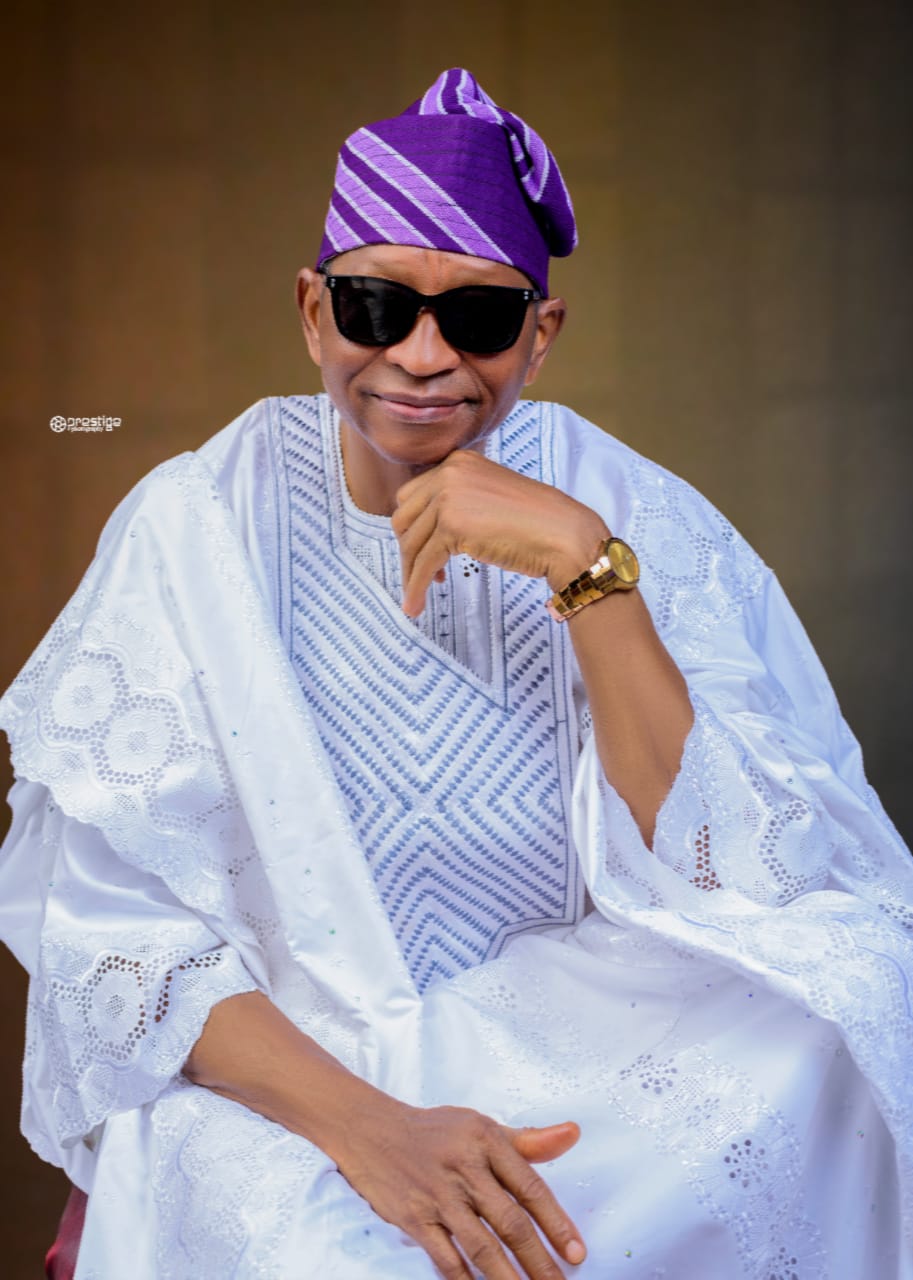


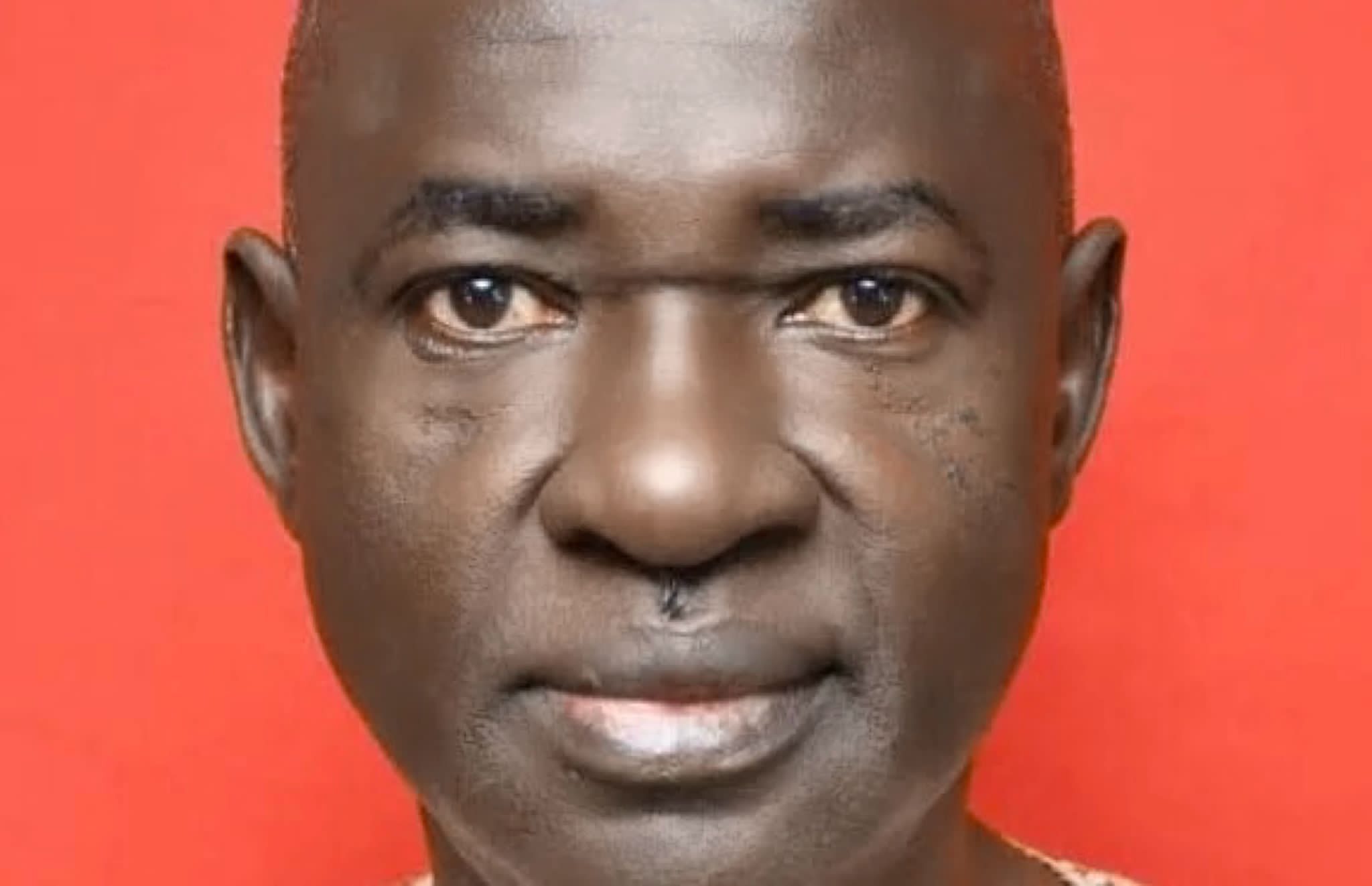
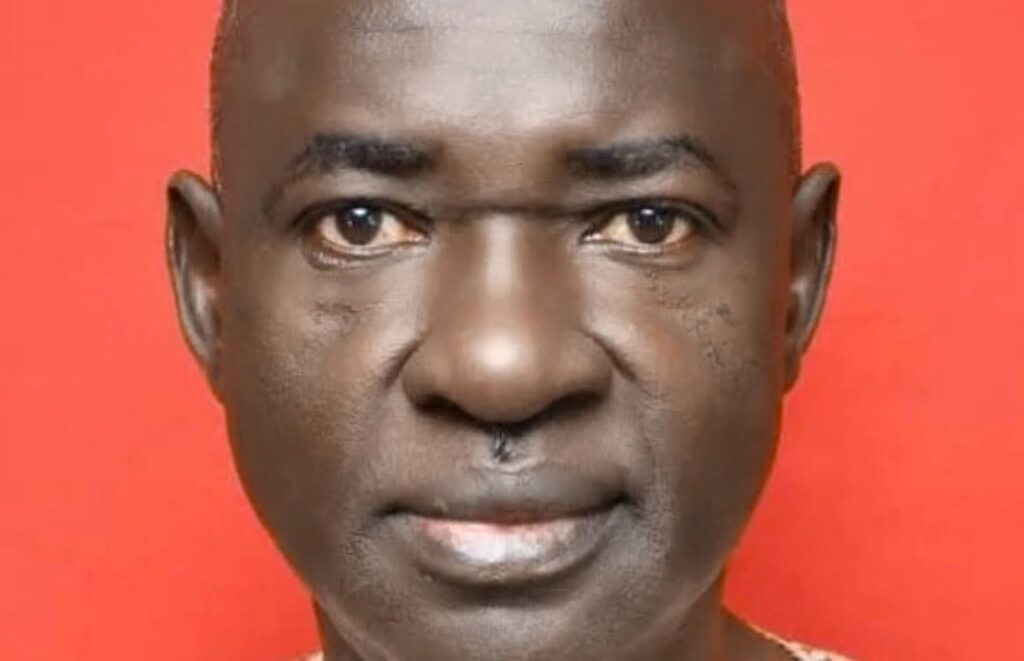
Born into royalty but shaped by circumstance, Prince Dr Lawrence Adeyomola Adegoke has journeyed an extraordinary path—from a village primary school and the humble typewriter to the newsroom, the classroom and the university lecture theatre. At 80, he looks back on a remarkable life shaped not by determination alone, but by what he describes as the uncommon and abundant grace of Almighty God.
There are lives that can be adequately captured by a list of dates, degrees, appointments and accomplishments. And then there are lives that demand something more—a story of the road travelled, the obstacles encountered, the hands that helped along the way, the doors that opened unexpectedly and, above all, the stubborn refusal to allow difficult circumstances to have the final word.
The life of Prince Dr Lawrence Adeyomola Adegoke is unmistakably one of such lives—a remarkable journey of perseverance, grace, learning and enduring impact.
At 80, Prince Adegoke is not merely celebrating a birthday. He is marking eight decades of a remarkable journey—from Ipetu-Ijesa to Lagos, from Lagos to Ibadan, from a typewriter to a newsroom, from broadcasting to the classroom, from the classroom to the university, and from the university to a life of scholarship, teaching and mentorship.
It is a journey that began on August 12, 1946, in Ipetu-Ijesa, where he was born into the Afinbiokin Royal Family to the late Prince Amos Adegoke Olowu and the late Princess Grace Oyeleye Adegoke, née Ogunnika.
Yet the story of the man known today as Prince Dr Lawrence Adeyomola Adegoke, PhD, did not begin with the privileges that the word “royal” might suggest. It began with a boy called Ojo Yeuge.
And it began with learning.
The village boy and his first foundation
Young Lawrence received his early education at St Paul’s Anglican Primary School, Ipetu-Ijesa, between 1954 and 1959, obtaining his Primary Six Certificate. He has always regarded those early years as part of the foundation upon which the rest of his life was built.
After a brief stay at the then Community Modern School, Ipetu-Ijesa, in 1960, life took him to Lagos through the intervention of his elder sister, the late Mrs Janet Ajilaran Folowosele, née Adegoke.
In Lagos, the young Ojo Yeuge enrolled at Renascent Model Secondary School, Palm Grove, Mushin. But the journey almost stopped before it had properly begun. Financial difficulties forced him to discontinue his secondary education after only the first term in 1961.
For many young people, such a setback might have marked the end of an educational dream. For Ojo Yeuge, it became a detour.
He enrolled instead at a typewriting and shorthand institute at No. 1 Shokunbi Street, Mushin, Lagos, where he began acquiring stenographic skills. It was an apparently modest beginning. Yet sometimes, the smallest door opens into the largest room.
The typewriter would become one of the first important instruments through which Lawrence Adegoke would write his way into a larger life.
When opportunity found the chorister
In 1964, following the death of his elder sister, Janet, Lawrence returned to Ipetu-Ijesa. There, he continued developing his typewriting skills.
At St Paul’s Anglican Church, he was not only a young man learning a trade; he was also a chorister. It was there that the late Venerable Canon Oduwale noticed his typewriting ability.
In 1965, the priest offered him employment as a typist in the church office.
It was an early lesson in the power of ability—and in the importance of someone recognising that ability.
Lawrence had not yet acquired the degrees that would later adorn his name. He had no university appointment. He was simply a young man who had learned a skill and encountered someone perceptive enough to see its potential.
Then came another turning point.
His uncle, the late Pa Engr Amos Oyeniran Ogunnika, took him to Ibadan. There, in 1967, Lawrence secured employment with the then Nigerian Broadcasting Corporation, now the Federal Radio Corporation of Nigeria.
The boy who had learned typewriting and shorthand was entering the world of broadcasting.
The journey was about to gather momentum.
From the typewriter to the newsroom
At NBC, Lawrence did not remain content with what he already knew. He advanced his stenographic training and successfully passed examinations in typewriting, shorthand and English.
His performance earned him promotion to Chief Typist in 1968. He was subsequently transferred from the Schools Unit to the NBC Newsroom.
That transfer was more than a change of office. It placed him closer to the world of news, communication and journalism—the fields that would eventually become central to his professional and academic identity.
But while working, he was also studying.
As a private candidate, he obtained his West African School Certificate Examination in 1970. By 1972, he had also passed his GCE Advanced Level examinations in Government and Economics.
The pattern that would define much of his life was already becoming clear: work, study, learn, advance—and begin again.
The scholar takes shape
In 1973, he gained admission to the then Institute of Mass Communication at the University of Lagos, where he earned a Diploma in Mass Communication. The young typist was transforming himself into a communication professional.
In 1976, Lawrence moved to the University of Ibadan to study Language Arts, graduating in 1979.
After his National Youth Service in 1980, he returned to the FRCN News Department, carrying with him not only professional experience but an expanding intellectual appetite.
In 1982, he left Radio Nigeria Ibadan. The following year, he entered the teaching profession as a Senior Tutor in English Language at Olosunde Community Grammar School. He was subsequently transferred to Lalupon Community High School, both in the Lagelu area of Ibadan.
The broadcaster was becoming a teacher.
And the teacher was becoming a scholar.
In 1987, he returned to his alma mater, the University of Ibadan, where he earned a Master’s degree in Language Arts from the Department of Communication and Language Arts.
His academic career then began to take formal shape.
In 1993, he joined the Polytechnic, Ibadan, Erùwà Campus, as a lecturer. Two years later, in 1995, he became an Assistant Lecturer at the University of Ibadan.
Then came another defining milestone.
In 2005, after years of work, study and professional development, Lawrence Adegoke earned his PhD in Communication and Language Arts.
The journey from the typewriter to the doctorate had been completed.
Yet learning was not.
The teacher who never really retired
Between 2005 and 2008, Dr Adegoke taught Mass Communication courses at Olabisi Onabanjo University, Ago-Iwoye, before returning to the University of Ibadan.
In 2011, he retired from the Department of Communication and Language Arts, University of Ibadan.
For some people, retirement marks the end of professional life.
For Dr Adegoke, it merely changed the setting.
Between 2013 and 2014, he continued teaching at Al-Hikmah University, Ilorin. From 2014 to 2018, he taught in the Department of Communication at Bowen University, Iwo, Osun State.
The chronology tells the story plainly: retirement did not retire the teacher.
For him, teaching was never simply employment. It was a vocation—a way of transmitting knowledge, influencing minds and remaining intellectually engaged with the world.
There is also a beautiful symmetry in that journey.
The man whose formal education was once interrupted by financial difficulty ultimately spent decades helping others acquire knowledge. The boy who could not continue secondary school at the time became a university scholar who would help generations of students find their own intellectual paths.
Nothing was wasted.
A marriage built on time and companionship
Behind the academic and professional story is another story—one of companionship.
On October 20, 1979, Prince Lawrence Adeyomola Adegoke married Queen Comfort Adenike Adegoke, née Adedeji, at St Paul’s Anglican Church, Yemetu, Ibadan.
Their marriage followed a courtship that lasted ten years.
Ten years of courtship. Then decades of marriage.
Together, they have been blessed with children and grandchildren.
Their story is therefore not merely that of a scholar pursuing individual achievement. It is also that of a husband, father and grandfather whose journey has unfolded within the enduring institution of family.
Lawrence and Comfort continue to worship at Bishop Akinyele Memorial Anglican Church, Iwo Road, Ibadan, where they are members of the Torch Bearers Society.
For a man whose life has travelled through several professional identities, his faith has remained one of its constants.
Faith as the thread running through the story
Perhaps no single theme runs more consistently through Dr Adegoke’s life than faith.
It was present in his early years as a chorister at St Paul’s Anglican Church, Ipetu-Ijesa. It remained present through the uncertainties of his youth, his professional struggles, his academic pursuits and his family life.
And at 80, he does not explain his journey solely in terms of personal ability.
He sees divine grace at work.
His stated ambition is not to be remembered merely for the degrees he earned, the institutions where he worked or the positions he occupied. He wishes to be remembered as himself—a practical Christian who, by the grace of God, was able to actualise his potential.
That perspective says something important about the man.
For all the certificates and titles attached to his name—Prince, Dr, PhD—the achievement he appears to value most deeply is not the accumulation of honours, but the opportunity to have lived meaningfully.
The friendships and simple pleasures that enrich a life
Dr Adegoke and his wife are life members of the Frontliners Group, Ibadan, a social organisation founded in 1975 by eight like-minded friends who were later joined by their wives.
It is another reminder that the richness of a life cannot be measured only in professional milestones.
There are friendships. There is fellowship. There are shared memories. There are people with whom one grows older and with whom the years acquire meaning.
And then there are the simple pleasures that keep life human.
Dr Adegoke enjoys table tennis. He watches football. He listens to indigenous Yoruba music and gospel music.
For a man who has spent much of his life around books, classrooms, broadcasting and scholarship, these interests reveal another side of him—a man still connected to recreation, culture, faith and the everyday pleasures of living.
The remarkable distance between where he began and where he arrived
Perhaps the most moving way to understand Dr Lawrence Adegoke’s life is to place the beginning beside the destination.
A boy from Ipetu-Ijesa.
A child whose formal secondary education was interrupted by financial difficulty.
A young man who learned typewriting and shorthand.
A church typist.
A broadcasting typist.
A newsroom worker.
A private candidate pursuing examinations while working.
A student of Mass Communication.
A graduate of Language Arts.
A secondary-school teacher.
A lecturer.
A university academic.
A Master’s degree holder.
A PhD holder.
A scholar and teacher who continued teaching even after retirement.
The progression is extraordinary not because every step was effortless, but because each step was built upon the one before it.
Nothing was wasted.
The typewriter prepared him for the newsroom. The newsroom deepened his relationship with communication. Communication opened the door to further academic study. Academic study led him into teaching. Teaching led him deeper into scholarship. And scholarship became a platform from which he could influence generations beyond himself.
This is why the story is larger than a CV.
It is a story about perseverance. It is a story about lifelong learning. It is a story about the capacity to begin again when circumstances interrupt the first plan. It is a story about recognising opportunity when it appears in unexpected forms.
And, above all, it is a story about faith.
Eighty years—and still a living story
Eight decades can make a man a repository of memories. But they can also make him a repository of lessons.
For Prince Dr Lawrence Adeyomola Adegoke, 80 is not an endpoint. It is a vantage point.
From that vantage point, he can look back at the boy called Ojo Yeuge and see the astonishing distance travelled.
He can remember Ipetu-Ijesa. He can remember Lagos. He can remember the typewriter. He can remember the newsroom. He can remember classrooms and lecture theatres. He can remember examinations taken as a private candidate. He can remember degrees pursued and earned. He can remember colleagues, students, friends and family.
He can remember the years of work and the years after formal retirement when he continued to teach.
And perhaps, above all, he can look at the journey and say that grace was present throughout.
That is the most compelling feature of his 80-year story.
Not that every door opened.
Not that every road was straight.
Not that every circumstance was easy.
But that when one road closed, another was found.
When formal schooling was interrupted, vocational learning became a bridge. When the typewriter appeared to be merely a means of earning a living, it became the first instrument of a remarkable professional journey. When broadcasting ended, teaching began. When retirement came, teaching continued.
And when the years accumulated, they did not erase the appetite for learning.
A birthday, but also a testimony
As Prince Dr Lawrence Adeyomola Adegoke celebrates 80 years, the most fitting tribute may therefore be found not simply in the number itself, but in the story contained within it.
It is the story of a royal son who learned early that heritage alone does not write a person’s destiny.
It is the story of a young man who encountered financial difficulty without surrendering his hunger for education.
It is the story of a worker who continued studying while earning a living.
It is the story of a broadcaster who became a teacher, a teacher who became a scholar, and a scholar who continued teaching after retirement.
It is the story of a husband, father, grandfather, churchman, friend and mentor.
But ultimately, it is the story of a man who wishes to be remembered not merely for an impressive title or a long list of accomplishments, but for being himself.
At 80, Prince Dr Lawrence Adeyomola Adegoke can look back with gratitude at a road that began with a boy called Ojo Yeuge in Ipetu-Ijesa and led through a typewriter, a newsroom, classrooms and lecture theatres to a life of scholarship, teaching and mentorship.
The road was not always straight. His education was interrupted. Opportunities sometimes arrived in unexpected forms. Yet each experience became part of the next chapter.
The typewriter opened the door to broadcasting. Broadcasting led him deeper into communication. Communication led to scholarship. Scholarship led to teaching. And teaching became a vocation that outlived formal retirement.
Perhaps, then, the most fitting way to celebrate his 80 years is not simply to count the decades, degrees, appointments and accomplishments, but to recognise the grace that he believes carried him through them all.
The boy called Ojo Yeuge became Prince Dr Lawrence Adeyomola Adegoke.
But the journey did not end with the titles.
At 80, the learner remains a learner, the teacher remains a teacher, and the story remains beautifully alive.
For him, it is, ultimately, a testimony to the uncommon and abundant grace of Almighty God—the Peerless, Merciful and Compassionate Creator.
At 80, that testimony is not merely a conclusion.
It is a celebration.
And, beautifully, it is still a story being written.