Featured
Tinubu seeks Senate approval for fresh N10.79trn foreign loan amid debt controversy

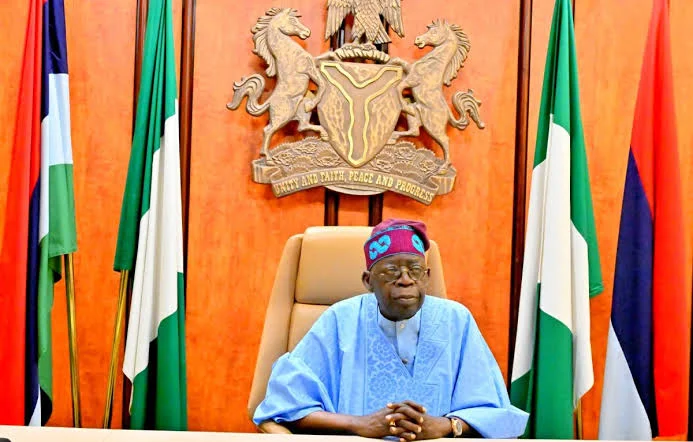
President withdraws earlier $20.5bn and €1.05bn borrowing proposal as lawmakers face calls for greater transparency and accountability over public debt
President Bola Tinubu has sought Senate approval for fresh external borrowing of $7.7 billion, equivalent to approximately N10.79 trillion, to partly finance the 2026 budget deficit, following controversy over his earlier request for external loans totalling $20.52 billion and €1.045 billion.

The new request, conveyed in a letter dated October 26, 2026, was read by Senate President Godswill Akpabio during plenary in Abuja on Wednesday, November 4.
Akpabio said the latest correspondence effectively superseded the earlier borrowing proposal, describing it as more explicit about the amount required and the funding sources the Federal Government intended to explore.
The development comes amid growing concerns over Nigeria’s rising public debt, the cost of servicing existing obligations and the need for greater transparency in the utilisation of borrowed funds.
The President’s earlier borrowing proposal had attracted criticism from opposition politicians, civil society organisations and economic analysts, who questioned the justification for additional external loans without comprehensive disclosure of the projects to be financed and evidence of the returns on previous borrowings.
How the proposed loan will be raised
In the latest letter, Tinubu explained that the 2026 Appropriation Act provided for N29.2 trillion in new borrowings to partly finance a budget deficit of approximately N31.4 trillion.
The approved borrowing comprises N18.4 trillion in domestic borrowing and N10.79 trillion in external financing, with the latter forming the subject of the President’s request.
Tinubu said the Federal Government intended to raise approximately $7.7 billion through one or a combination of funding options, including concessional and commercial loans from multilateral and bilateral institutions, International Monetary Fund facilities, bridge financing, direct borrowing from international financial institutions and Eurobond issuance.
He explained that the options would be pursued simultaneously, taking into consideration their respective costs, benefits and the time required to access the funds.
The President, however, indicated that greater emphasis would be placed on Eurobond issuance because it could be concluded relatively quickly and potentially raise larger amounts at competitive costs.
He noted that the final terms and conditions, including interest rates and repayment periods, would depend on prevailing market conditions at the time of pricing.
According to him, the Federal Ministry of Finance and the Debt Management Office would work to secure the most favourable terms for the country.
Tinubu said the proposed borrowing would finance priority programmes and projects in defence and security, transportation, agriculture, power, education and healthcare.
He added that the funds would be received by the Central Bank of Nigeria on behalf of the Federal Government and were also expected to support the country’s external reserves and contribute to exchange-rate stability.
Why the earlier borrowing proposal generated controversy
The latest request follows the controversy generated by Tinubu’s earlier proposal seeking legislative approval to process external loans worth $20.52 billion and €1.045 billion under the 2026–2027 Supplementary External Borrowing Plan.
The earlier proposal, which amounted to approximately $21.7 billion when the dollar and euro components were combined, was presented as necessary to finance critical infrastructure and development projects across the country.
However, the size of the proposed facilities and questions surrounding the management of previous borrowings triggered calls for greater scrutiny before the National Assembly could approve additional loans.
Anambra Central Senator, Victor Umeh, questioned the government’s handling of previous borrowings, asking why contractors executing capital projects were still awaiting payment despite repeated approvals for loans intended to finance government budgets and projects.
Umeh argued that the government needed to explain why successive borrowing programmes had not translated into the timely funding of approved budgets and the settlement of outstanding obligations to contractors.
He also raised concerns about the number of budgets being implemented concurrently and the implications for fiscal accountability.
His intervention brought renewed attention to the need for the government to account for funds already borrowed and demonstrate how the proceeds had been deployed.
Atiku, HURIWA demand accountability
Former Vice-President Atiku Abubakar also urged the National Assembly to suspend consideration of the earlier borrowing proposal until the Federal Government provided comprehensive details of the projects to be financed.
Atiku called for the disclosure of project descriptions, costs, locations, contractors, loan terms and repayment obligations, arguing that lawmakers should not approve additional external borrowing without sufficient information to enable Nigerians to scrutinise the proposed expenditure.
He questioned the wisdom of committing the country to substantial new debt without a clear, project-by-project account of the intended investments and their expected economic benefits.
The former vice-president also linked his concerns to allegations surrounding the financing of major infrastructure projects, including the Lagos-Calabar Coastal Highway. His claims formed part of the opposition’s criticism of the administration’s borrowing plans and were not, by themselves, proof of wrongdoing.
Similarly, the Human Rights Writers Association of Nigeria (HURIWA) asked the President to account for revenues generated from petrol subsidy removal and increased tax collections before seeking approval for additional external loans.
The organisation warned that continued reliance on foreign borrowing could increase debt-servicing obligations, expose public finances to exchange-rate risks and reduce the funds available for essential public services.
HURIWA urged lawmakers to demand details of the country’s debt stock, repayment schedules, the terms of the proposed facilities and the specific projects expected to benefit.
It also called for an independent assessment of whether the proposed loans would generate sufficient economic returns, employment and productivity gains to justify the additional liabilities.
Economists warn about debt-servicing pressure
The earlier proposal also renewed concerns among economic analysts about Nigeria’s capacity to service its growing debt obligations.
Some analysts warned that the country’s relatively weak revenue base, combined with rising debt-servicing costs, could undermine fiscal stability if borrowing continued without corresponding improvements in revenue generation and the productivity of public expenditure.
They argued that the critical question was not simply whether Nigeria’s debt remained manageable relative to the size of its economy, but whether government revenue was sufficient to meet repayment obligations while funding essential services.
Nigeria’s public debt stood at N166.79 trillion as of June 2026, according to figures cited in recent reports on the borrowing controversy. The increase in the naira value of public debt has also been influenced by exchange-rate depreciation, meaning that the increase should not be interpreted solely as fresh cash borrowing.
Concerns have additionally been raised about the funding of the sinking fund established to provide resources for retiring maturing government loans. Reports based on budget implementation figures indicated that releases into the fund between 2021 and 2025 fell substantially short of the amounts budgeted.
These concerns have strengthened calls for the government to publish a consolidated account showing the loans approved, facilities signed, funds disbursed, projects executed, repayments made and outstanding obligations.
While the Federal Government maintains that external borrowing is necessary to address the country’s infrastructure deficit and finance development priorities, critics insist that the benefits must be demonstrable and commensurate with the financial obligations being transferred to future administrations and generations.
What the latest request means
The withdrawal or supersession of the earlier borrowing proposal and its replacement with a more narrowly defined request for $7.7 billion represent a significant change in the financing proposal before the National Assembly.
However, the revised request does not eliminate the broader questions surrounding Nigeria’s borrowing strategy, including the cost of the proposed facilities, the projects to be financed, the expected economic returns and the government’s capacity to meet future repayments.
The proposed emphasis on Eurobonds also raises the importance of scrutinising the final interest rates, maturity periods and other conditions before the government commits to the facilities. Although Eurobonds may provide access to substantial funding within a relatively short period, their costs and risks depend on market conditions and the terms ultimately secured.
The Senate President referred the latest request to the Senate Committee on Local and Foreign Debt for consideration and directed it to report back as soon as practicable.
The committee’s scrutiny will be crucial in determining whether the proposed borrowing meets the requirements of the Debt Management Office (Establishment, etc.) Act, 2003, and whether the terms and conditions provide adequate safeguards for the country’s financial interests.
Ultimately, the issue extends beyond the amount Nigeria seeks to borrow. It concerns whether the Federal Government can demonstrate that the proceeds of existing and proposed loans will deliver measurable development benefits, strengthen revenue generation and leave the country better equipped to meet its debt obligations.
For the National Assembly, the challenge is to balance the government’s need to finance critical infrastructure and other development priorities against its constitutional and legislative responsibility to ensure transparency, accountability and prudent management of public resources.




Atiku’s DSS Allegation: Why evidence must prevail over political rhetorics, by Olumide Bajulaiye

Tinubu seeks Senate approval for fresh N10.79trn foreign loan amid debt controversy

Journalist killings: Adesanya-Davies seeks global action against impunity

5,000 academics to endorse Tinubu’s re-election bid in November

It’s South’s turn, Kwankwaso tells Atiku, urges support for Obi

Personal borrowing hits record N1.99trn as Nigerians struggle with rising costs

Beyond Pilgrimage: The politics of Tinubu’s Saudi trip, by Lasisi Olagunju

Gunmen abduct PLASU female student, shoot victim in fresh attack

Between Kidnap and Attack: Questions Sowore must answer, by Lemmy Ughegbe, Ph.D

As opposition parties gather momentum, by Dr Monday Ekpe

Presidency seeks private sector funding for state Police
Tinubu appoints ex-DSS DG Yusuf Bichi NISS Governing Board Chairman
Sanction of Judges: NJC on quiet revolution to cleanse judiciary—Prof Akinseye-George, SAN

Agbakoba, Ojo, Etomi, three others to receive Gavel Lifetime Achievement Awards

Media Trust Group to launch AI-powered converged digital Newsroom

Does Nigeria truly have over 103 million voters, asks Prof Chidi Anselm Odinkalu

Ex-DSS officer apologises to DG over leaked memo, threatens lawsuit against SaharaReporters

Opene v NJC: That S’Court landmark ruling on NJC’s disciplinary powers over judges, by Ebun-Olu Adegboruwa,SAN

Rivers lawyers give VeryDarkMan seven days to apologise over alleged defamation
A First generation bank employee on the run after diverting ₦40bn — Report
-
 NewsOctober 28 2026
Presidency seeks private sector funding for state Police
-
 General NewsOctober 23 2026
Tinubu appoints ex-DSS DG Yusuf Bichi NISS Governing Board Chairman
-
Bar and BenchMay 2 2025
Sanction of Judges: NJC on quiet revolution to cleanse judiciary—Prof Akinseye-George, SAN
-
 Bar and BenchOctober 23 2026
Agbakoba, Ojo, Etomi, three others to receive Gavel Lifetime Achievement Awards
-
 NewsOctober 18 2026
Media Trust Group to launch AI-powered converged digital Newsroom
-
 CommentaryOctober 25 2026
Does Nigeria truly have over 103 million voters, asks Prof Chidi Anselm Odinkalu
-
 General NewsOctober 21 2026
Ex-DSS officer apologises to DG over leaked memo, threatens lawsuit against SaharaReporters
-
 FeaturedOctober 27 2026
Opene v NJC: That S’Court landmark ruling on NJC’s disciplinary powers over judges, by Ebun-Olu Adegboruwa,SAN