News
Present N’Assembly, worst thing that ever happened to Nigeria — Utomi

Famous economist, Prof Pat Utomi, has described the current National Assembly as the worst assemblage selfish politicians that ever happened to Nigeria.

Utomi who spoke with The Punch said it is worrisome enough that Nigeria is a tragic failure but that the nation’s situation became worse given the present political class and the elites, particularly the legal elite, who are annoyingly self-centred rather than thinking of the common good of the nation.
He argued that the National Assembly, which should be the platform for robust debates to turn around the nation’s fortunes, had been captured.
Utomi said it was baffling that the Nigerian political class failed to recognise that the nation was presently at war, requiring a war cabinet where almost everybody pulls together to fix the nation’s problems.
He stressed that there was a need for the leadership to sincerely lead by example, particularly cutting down on its lavish lifestyle, rather than calling on Nigerians to sacrifice.
“Nigeria is a failure right now; democracy is not working. We all know that; anybody who does not know that is fooling himself. We have total judicial capture; we have legislative capture, so there is no alternative thinking in the country.
“For me, the worst thing that has happened to the country is the National Assembly because that is where you should have the kind of debates that will lead you to options, but you can’t because the whole place is captured.
“These guys are just hustlers trying to get what they can out of the system without asking what will make the country work.
“When you have that kind of problem, you come to the point that James Robinson was making when he says a classic example is Nigeria which knows what to do but cannot seem to do it. You need, in a time like this, a certain kind of mindset.
“A local example is Olusegun Obasanjo in 1976/1977 when the oil crisis began to slide. He decided that we would go to low-profile mode. As head of state, his car was a Peugeot 504; he cut his travels.
“Anybody who watches the way people in power spend public resources cannot take seriously any statement that this is a time of sacrifice. So, the problem begins with them. Intense political commitment is not there,” he said.
The economist added, “You cannot save an economy when the political actors are on a binge and you will not have the kind of consequences that you have today for the economy.
“It is an intensely political process to turn around the economy. The Nigerian political class needs to recognise that we are in a moral equivalence of a war. And when a country is at war, it pulls together. Nigerian politicians still think they are on a binge.
“So, they are all running in different directions, and nobody is sitting down to forge a national consensus on how to solve this problem. When you have the moral equivalence of war, what you need is to set up a war room, and war cabinet and bring everybody together to say, how do we fix these problems.”
He stressed the need for intense political will to forge a national consensus to solve the nation’s problems, as against politicians stockpiling money to prosecute their next electioneering quest.
Asked if the adherence of Nigeria to policies of the International Monetary Fund and World Bank was a bane of Nigeria’s economic challenges, Utomi said the world bodies would usually provide templates, but it was up to nations to analyse such templates in line with their local peculiarities.
He said the challenge was whether Nigeria deployed the requisite local, intellectual knowledge to evaluate IMF templates in the interest of the common good.
“IMF can have a template, but what is responsible for the outcome is not their template; it is how local actors politically live their way through doing the right things for growth and development for their country. IMF and World Bank have got it wrong many times; it does not mean that their intention is not right.
“It means that they just have formulas and it is not an exact science. So what is desperately needed is for there to be a local, intellectual capacity to evaluate those templates and act in the interest and good of the local environment.
“This is where Nigeria has been a tragic failure because the political class and its elites, particularly the legal elite, have not acted as patriots either because they are ignorant or because they are too pathologically self-centred to think of the common good.”



Between Kidnap and Attack: Questions Sowore must answer, by Lemmy Ughegbe, Ph.D

As opposition parties gather momentum, by Dr Monday Ekpe

After years of rivalry, Adeleke, Oyetola camps unite for Tinubu

Fresh Ebola concerns as Nigeria identifies two suspected cases

US court rejects bid to question Tinubu over alleged cyberattacks

Election season: Odinkalu raises alarm over alleged ‘politically compromised judges’

Fintiri hails NIPR’s inclusive approach to national reputation management

2027: INEC has no preferred candidate, party, Amupitan assures ECOWAS

Obasanjo: Debt worse than leprosy, destroys generations
Imo NYSC kidnap: Bus driver, witness identify five suspects in court

Presidency seeks private sector funding for state Police

Tinubu appoints ex-DSS DG Yusuf Bichi NISS Governing Board Chairman

Agbakoba, Ojo, Etomi, three others to receive Gavel Lifetime Achievement Awards

Media Trust Group to launch AI-powered converged digital Newsroom
Sanction of Judges: NJC on quiet revolution to cleanse judiciary—Prof Akinseye-George, SAN
Does Nigeria truly have over 103 million voters, asks Prof Chidi Anselm Odinkalu

Ex-DSS officer apologises to DG over leaked memo, threatens lawsuit against SaharaReporters

Rivers lawyers give VeryDarkMan seven days to apologise over alleged defamation

Opene v NJC: That S’Court landmark ruling on NJC’s disciplinary powers over judges, by Ebun-Olu Adegboruwa,SAN
N2bn Fraud: How Eteta Ita looted FIRS’ funds to service her private school ― Witness
-
 NewsOctober 28 2026
Presidency seeks private sector funding for state Police
-
 General NewsOctober 23 2026
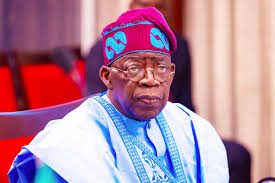
Tinubu appoints ex-DSS DG Yusuf Bichi NISS Governing Board Chairman
-
 Bar and BenchOctober 23 2026
Agbakoba, Ojo, Etomi, three others to receive Gavel Lifetime Achievement Awards
-
 NewsOctober 18 2026
Media Trust Group to launch AI-powered converged digital Newsroom
-
Bar and BenchMay 2 2025
Sanction of Judges: NJC on quiet revolution to cleanse judiciary—Prof Akinseye-George, SAN
-
 CommentaryOctober 25 2026
Does Nigeria truly have over 103 million voters, asks Prof Chidi Anselm Odinkalu
-
 General NewsOctober 21 2026
Ex-DSS officer apologises to DG over leaked memo, threatens lawsuit against SaharaReporters
-
 NewsOctober 25 2026
Rivers lawyers give VeryDarkMan seven days to apologise over alleged defamation