News
FG approves N70,000 monthly transport allowance for workers

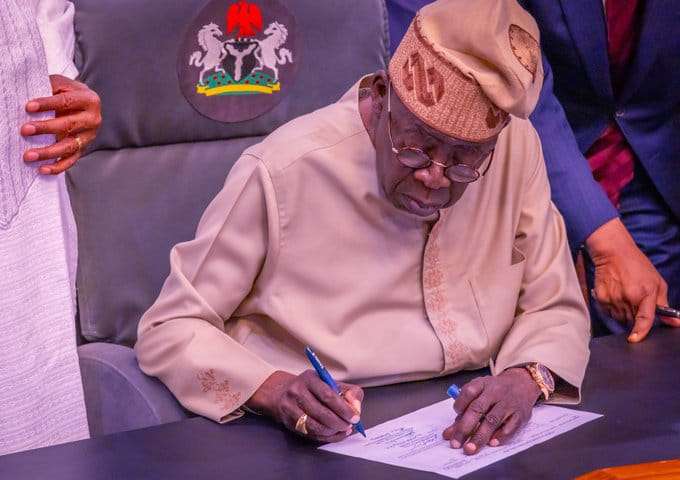
The Federal Government has approved a monthly transport allowance of N70,000 for Nigerian workers for six months beginning in November 2026, alongside plans to settle outstanding peculiar allowances in three instalments.
The decisions were reached at a conciliation meeting between government representatives and the leadership of the Nigeria Labour Congress (NLC) at the Federal Ministry of Labour and Employment on Tuesday.

The agreement also provides for the payment of 19 months of outstanding allowances owed to health workers within three months, beginning in December 2026.
According to the resolutions signed by government representatives and NLC President, Joe Ajaero, the peculiar allowance was approved with effect from May 1, 2026, with accumulated arrears to be paid in three equal monthly instalments from November.
The meeting further agreed to immediately constitute the Minimum Wage Negotiation Committee and commence discussions, although both parties remained divided over the effective date for implementing the national minimum wage.
The conciliation followed the NLC’s concerns over delays in addressing workers’ welfare demands amid rising living and transportation costs.
Government representatives at the meeting included the Director-General of Budget, Tanimu Yakubu; the Permanent Secretary of the Special Welfare Office in the Office of the Head of the Civil Service of the Federation, Dr Garba Abdul; and the Minister of Labour and Employment, Dr Muhammad Dingyadi.
The meeting also considered the payment of hazard allowances to agricultural officers. The Federal Ministry of Agriculture and Food Security has submitted the list of beneficiaries and the associated cost implications to the National Salaries, Incomes and Wages Commission for verification.
The verification is expected to be completed within two weeks, after which the commission will issue an implementation template.
On adjustments to the Consolidated Health Salary Structure (CONHESS), the commission undertook to complete an assessment of the cost implications within three weeks to enable the Presidential Committee on Salaries to make a decision.
However, the demand for tax relief for workers was referred to the National Economic Council, with the meeting noting that taxation was a statutory matter.
The conciliation process followed the NLC’s dissatisfaction with the government’s handling of its demands. The Ministry of Labour and Employment had held an initial meeting on October 22 before Tuesday’s session to advance discussions.
While the labour union expressed concerns over the government’s response to workers’ demands, the government reaffirmed its respect for the NLC’s right to advocate improved working conditions.
The resolutions also urged state and local governments to participate in the intervention process and encouraged unions to press for the implementation of the agreed measures.
Both parties agreed to reconvene after one month to review progress in implementing the resolutions.




37 suspected miners suffocated in NSCDC custody, FG panel finds

Tinubu seeks Senate approval for $20.52bn, €1.05bn external loans

FG approves N70,000 monthly transport allowance for workers

Opene v NJC: That S’Court landmark ruling on NJC’s disciplinary powers over judges, by Ebun-Olu Adegboruwa,SAN

Court rejects El-Rufai’s no-case submission in alleged phone-tapping trial

2027 Polls: CJN warns judges against political manipulation of courts

Military kills 16 ISWAP fighters in Lake Chad strikes

State Police: 25 Assemblies okay constitutional amendment
CCB probes Obi, Saraki, David Mark, four others over offshore assets

Body of Benchers rejects fresh admission request for NOUN Law graduates
Tinubu appoints ex-DSS DG Yusuf Bichi NISS Governing Board Chairman

Agbakoba, Ojo, Etomi, three others to receive Gavel Lifetime Achievement Awards

Media Trust Group to launch AI-powered converged digital Newsroom
Sanction of Judges: NJC on quiet revolution to cleanse judiciary—Prof Akinseye-George, SAN

Ex-DSS officer apologises to DG over leaked memo, threatens lawsuit against SaharaReporters

Does Nigeria truly have over 103 million voters, asks Prof Chidi Anselm Odinkalu
N2bn Fraud: How Eteta Ita looted FIRS’ funds to service her private school ― Witness
A First generation bank employee on the run after diverting ₦40bn — Report

Nollywood mourns as veteran Actor Francis Duru dies at 57

Rivers lawyers give VeryDarkMan seven days to apologise over alleged defamation
-
 General NewsOctober 23 2026
Tinubu appoints ex-DSS DG Yusuf Bichi NISS Governing Board Chairman
-
 Bar and BenchOctober 23 2026
Agbakoba, Ojo, Etomi, three others to receive Gavel Lifetime Achievement Awards
-
 NewsOctober 18 2026
Media Trust Group to launch AI-powered converged digital Newsroom
-
Bar and BenchMay 2 2025
Sanction of Judges: NJC on quiet revolution to cleanse judiciary—Prof Akinseye-George, SAN
-
 General NewsOctober 21 2026
Ex-DSS officer apologises to DG over leaked memo, threatens lawsuit against SaharaReporters
-
 CommentaryOctober 25 2026
Does Nigeria truly have over 103 million voters, asks Prof Chidi Anselm Odinkalu
-
FeaturedMarch 19 2024
N2bn Fraud: How Eteta Ita looted FIRS’ funds to service her private school ― Witness
-
CrimeJune 1 2024
A First generation bank employee on the run after diverting ₦40bn — Report