 11
11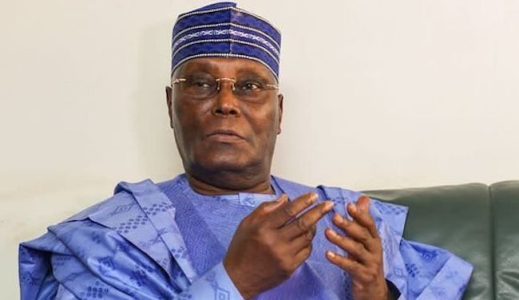


Former Vice President Atiku Abubakar has responded to recent criticism by former President Olusegun Obasanjo, accusing his former principal of attempting to rewrite history and defending his role in opposing the controversial third-term agenda during their time in office.
In a statement issued by his Senior Special Assistant on Public Communication, Phrank Shaibu, Atiku said Obasanjo’s latest remarks reflected what he described as “personal resentment” rather than an accurate account of history.
The former Vice President maintained that he had no regrets over opposing efforts to amend the Constitution to allow a third presidential term, insisting that his actions were guided by his commitment to Nigeria’s democracy and constitutional order.
“I am proud that I stood against the third-term agenda. I am proud that I stood by the Constitution of the Federal Republic of Nigeria. I have no apology whatsoever for frustrating every attempt to subvert our democracy for personal ambition,” Atiku said.
According to him, his disagreement with Obasanjo stemmed from his refusal to support what he described as an unconstitutional third-term bid.
Atiku argued that the struggle was not about personal rivalry but about protecting Nigeria’s democratic institutions.
“The Nigerian people won that battle. Democracy won that battle. History has already delivered its verdict,” he said.
The former Vice President also referenced recent remarks by the Director-General of the World Trade Organization (WTO), Dr. Ngozi Okonjo-Iweala, who, according to him, commended the economic management team under the Obasanjo administration in which he served.
He said the comments reinforced his belief that history would judge the administration’s economic record fairly.
Atiku further claimed that he played a significant role in supporting Obasanjo before and after his release from prison, including assisting his political return, but said he had no regrets over those actions.
“Do I regret helping Chief Obasanjo? Absolutely not. When God gives you the opportunity to lift another human being, you do so without expecting repayment,” he stated.
He, however, argued that historical events should not be distorted and maintained that his contributions to Obasanjo’s political journey should not be ignored.
The former Vice President expressed disappointment that public exchanges between both leaders were continuing at a time Nigeria faces economic hardship, unemployment and insecurity.
He said the focus should instead be on finding solutions to national challenges ahead of the 2027 general elections.
Atiku added that although he had exercised restraint over the years out of respect for Obasanjo and the office he once occupied, he would continue to respond whenever he believed historical facts were being misrepresented.
“Chief Obasanjo is entitled to his opinions. He is entitled to his personal grievances. What he is not entitled to are his own facts,” he said.
The former Vice President reaffirmed his commitment to what he described as national renewal, saying his attention remained focused on Nigeria’s future rather than personal disputes.
The political relationship between former President Olusegun Obasanjo and his former deputy, Atiku Abubakar, has remained one of Nigeria’s most closely watched rivalries since they left office in 2007.
Although they jointly led the country between 1999 and 2007, their relationship deteriorated during their second term, largely over disagreements on governance, succession and the proposed constitutional amendment that would have allowed a third presidential term for the President.
The proposal ultimately failed in the National Assembly, and both men have since offered sharply different accounts of the events surrounding that period.
Since leaving office, Obasanjo and Atiku have periodically exchanged public criticisms over leadership, governance and national politics.
While they have occasionally appeared together and, at different times, worked within the same political coalitions, their relationship has remained characterised by recurring disagreements, particularly in the run-up to major elections.
Their latest exchange comes as political activities begin to gather momentum ahead of the 2027 general elections, with both men continuing to play influential roles in Nigeria’s political discourse.