 11
11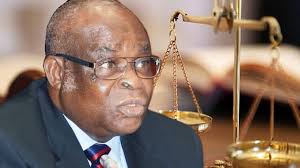


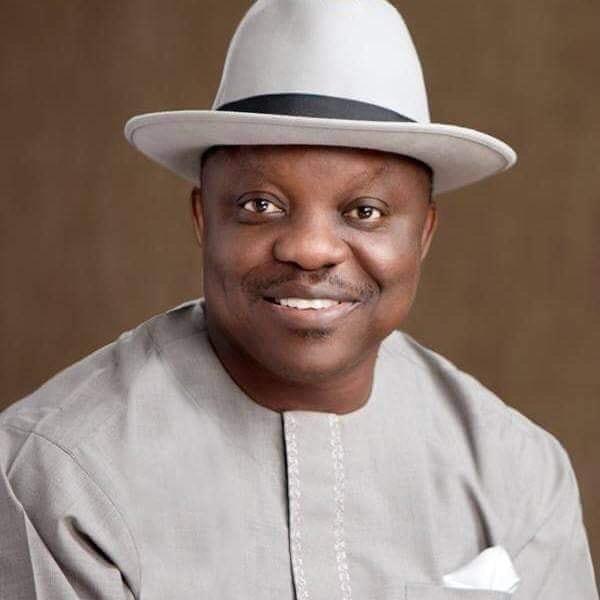
The Executive Secretary of the Anti-Corruption and Research-Based Data Initiative (ARDI), Dennis Aghanya, has denied allegations that the administration of former President Muhammadu Buhari used him to remove former Chief Justice of Nigeria, Justice Walter Onnoghen, from office ahead of the 2019 general elections.
Aghanya, who filed the petition that triggered proceedings against Onnoghen over alleged false asset declarations, said his organisation’s action was based on evidence gathered during an investigation that had lasted more than a year.
He spoke for the first time in eight years during an interview on Deep Insight With Agbonsuremi, a podcast anchored by veteran journalist Augustine Okhiria Agbonsuremi.
Aghanya said ARDI’s investigation was not politically motivated and was not targeted at Onnoghen as an individual.
According to him, the organisation’s mandate was to investigate issues of public interest and submit its findings to the appropriate authorities, while leaving law enforcement agencies to determine what action should be taken.
“I want you to know, it is not me, Dennis, it is the NGO. I am the executive secretary of the NGO. A lot of people are involved,” Aghanya said.
He said ARDI conducted evidence-based investigations as part of its efforts to strengthen the fight against corruption, stressing that the organisation did not select its targets on the basis of political affiliation, friendship or personal interest.
“Corruption should not be fought on a personal basis. The fight against corruption should be fair. It shouldn’t be motivated by either political affiliations or things of that nature,” he said.
Aghanya dismissed suggestions that the timing of the petition, which was filed close to the 2019 presidential election, indicated a political motive.
He said the investigation that culminated in the petition had commenced more than one year before it was filed, amid concerns over what he described as the failure of institutions, particularly the judiciary, to adequately address corruption-related issues.
“That’s a very funny perception by whoever shares that view because this particular issue… was something we had been on for more than one year,” he said.
‘I had parted ways with Buhari years earlier’
Aghanya also rejected claims that he was acting on behalf of the Buhari administration, although he acknowledged his previous political relationship with the former president.
He disclosed that he was formerly Buhari’s media spokesperson under the All Nigeria Peoples Party (ANPP) and later became the pioneer National Publicity Secretary of the Congress for Progressive Change (CPC).
He, however, said the relationship ended after he challenged Buhari in court over issues within the CPC.
“By 2011, we had rumbles in CPC, and we parted ways. That was the last time I had contact with, not just Buhari, but also some other people close to him,” he said.
Aghanya therefore dismissed suggestions that Buhari or his administration used him to achieve a political objective against Onnoghen.
“How can somebody that was… I had the guts to go to court against Buhari… So, how can I… after that I never had the opportunity to have anything in common with Buhari,” he said.
‘ARDI had no control over prosecution’
Aghanya defended the integrity of ARDI’s investigation, saying the organisation forwarded its findings to the appropriate authorities and had no control over the subsequent decision of the Code of Conduct Bureau (CCB) to prosecute Onnoghen.
He said critics had focused on the eventual outcome of the case rather than the evidence contained in ARDI’s report.
“Everybody is focusing on whether the CCB prosecuted or not; that is not an issue to us. The issue to us, which everybody should be concerned about, is that we carried out an investigation based on facts and evidence, and we forwarded it,” he said.
Asked whether he had apologised to Onnoghen following the former CJN’s removal from office and the eventual collapse of the case at the Code of Conduct Tribunal, Aghanya said he saw no reason to apologise.
“Why? Why the apology?” he asked.
He maintained that ARDI did not target Onnoghen personally but was concerned about the effectiveness of Nigeria’s institutions in tackling corruption.
“We didn’t target Onnoghen as an individual. Our investigation was not targeted at Onnoghen as an individual. So whether he was cleared or was not cleared shouldn’t be a concern to us,” he said.
Aghanya further alleged that information obtained during ARDI’s investigation indicated that some government agencies had previously gathered information concerning Onnoghen but failed to act on it.
According to him, ARDI’s intervention brought the information to the attention of the relevant authorities.
‘Fighting corruption is a double-edged sword’
The ARDI executive secretary described the fight against corruption in Nigeria as a “double-edged sword”, saying those who attempt to expose corruption can themselves face threats and opposition.
“We know that fighting corruption is not easy. It’s a double-edged sword. As you’re fighting corruption, corruption is fighting you back,” he said.
Aghanya disclosed that he and ARDI received threats following the Onnoghen controversy, alleging that the fallout also affected his family relationships.
He said he lost a relationship with a cousin whom he had known since childhood because of disagreements arising from the controversy.
He also said ARDI received neither financial assistance nor official commendation from the government for its role in the matter, despite claims by some Nigerians that the organisation had acted as an instrument of the administration.
“To date, not even a commendation letter has come. I never expected the government, but maybe some of the anti-corruption agencies. I see people being honoured and things like that.
Not even a commendation letter has come to ARDI for a job, a good job well done,” he said.
Aghanya said the absence of official recognition had not made him regret his involvement in the anti-corruption campaign.
Asked whether, with the benefit of hindsight, he wished ARDI had not filed the petition, he replied:
“Why should I regret a wonderful job we did?”
He described the controversy surrounding Onnoghen as unfortunate but maintained that the fight against corruption should not be subjected to exceptions based on the personality of the person involved.
“It was unfortunate. But the fight against corruption should not be; there shouldn’t be an exception. That is, I think, that should be the lesson from what we did,” he said.
Aghanya urges Nigerians to examine evidence
Aghanya urged Nigerians to investigate issues before reaching conclusions, particularly regarding the circumstances surrounding the Onnoghen case.
He said anyone who believed ARDI’s findings were manipulated should examine the evidence contained in the organisation’s report and determine whether it justified the action subsequently taken by the relevant authorities.
“Always investigate before you draw conclusions. The job we did, we did it in good faith,” he said.
He also criticised what he described as a lack of political will to fight corruption in Nigeria, alleging that anti-corruption investigators were sometimes discouraged when their investigations touched powerful interests.
According to him, Nigeria’s corruption problem cannot be solved if citizens continue to defend public officials on the basis of political affiliation, religion, ethnicity or personal relationships.
He said Nigerians should instead focus on the merits of allegations and the effectiveness of institutions established to fight corruption.
ARDI remains active, Aghanya says
Aghanya disclosed that ARDI remains involved in anti-corruption investigations, although its activities have reduced compared with previous years.
He attributed part of the decline to discouragement arising from the Onnoghen controversy, as well as health challenges that kept him away for some time.
He insisted, however, that his involvement in anti-corruption activities was not motivated by financial gain.
“If what I did was based on my expectations for payment, I’m not a small boy. We would sit down and talk and bargain, and you’ll pay me before I’ll do it,” he said.
Aghanya said his involvement in the anti-corruption campaign was driven by personal conviction and that he had no regrets about his role in the Onnoghen matter.
“I cannot have regrets because it was personal conviction. That’s why I don’t regret it,” he said.
Deep Insight With Agbonsuremi is a podcast dedicated to deepening democracy and governance in Nigeria and is anchored by veteran journalist Augustine Okhiria Agbonsuremi.
The controversy involving Aghanya and Justice Walter Onnoghen dates back to January 2019, when a petition over alleged false asset declarations triggered proceedings against the then Chief Justice of Nigeria at the Code of Conduct Tribunal.
Onnoghen was subsequently suspended from office by former President Muhammadu Buhari, while Justice Ibrahim Tanko Muhammad became Acting CJN.
The development generated significant controversy, with critics alleging that the process was politically motivated because it occurred shortly before the 2019 general elections.
Onnoghen later resigned from office, while the criminal proceedings against him at the Code of Conduct Tribunal eventually ended without a conviction.